


Description
Origin & botany
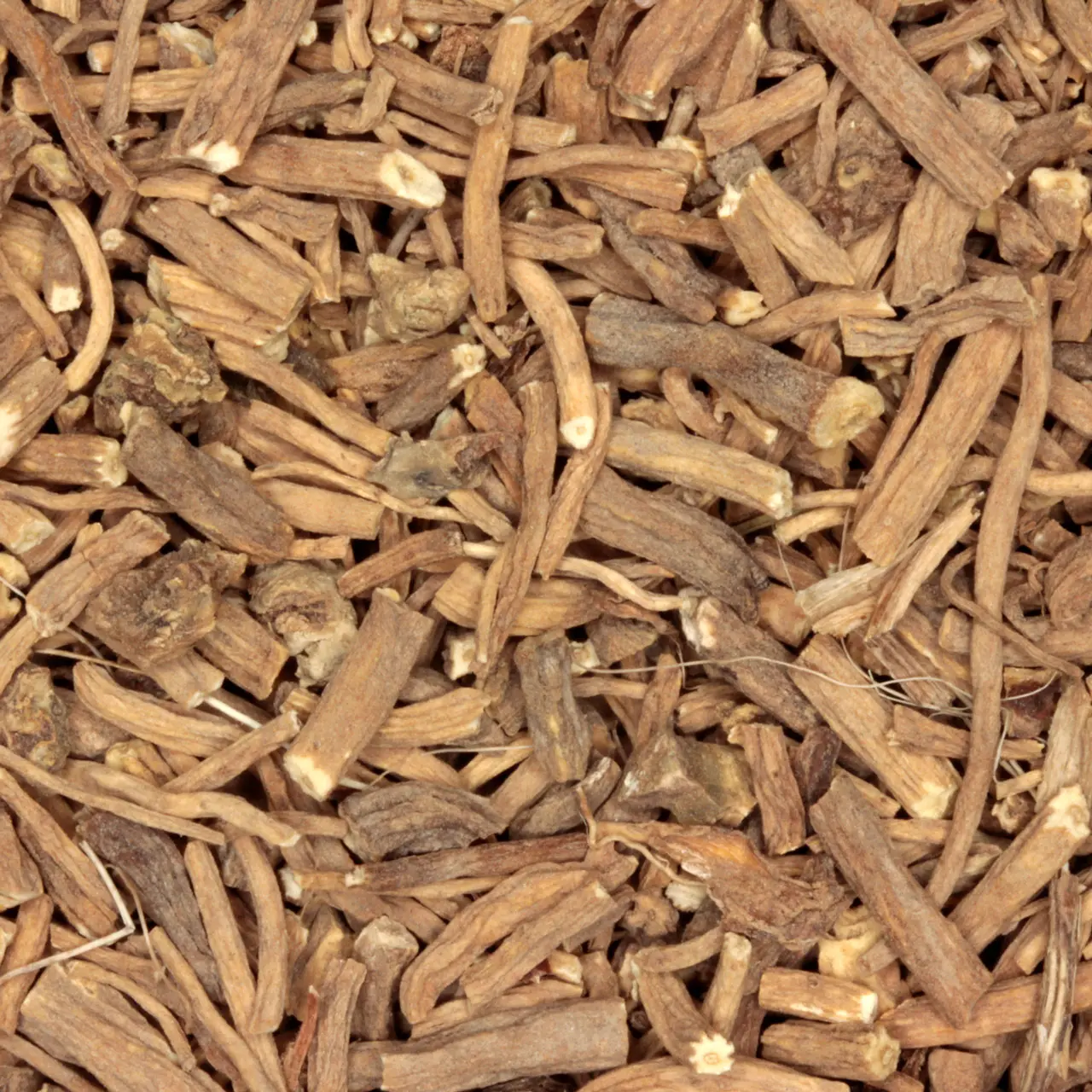
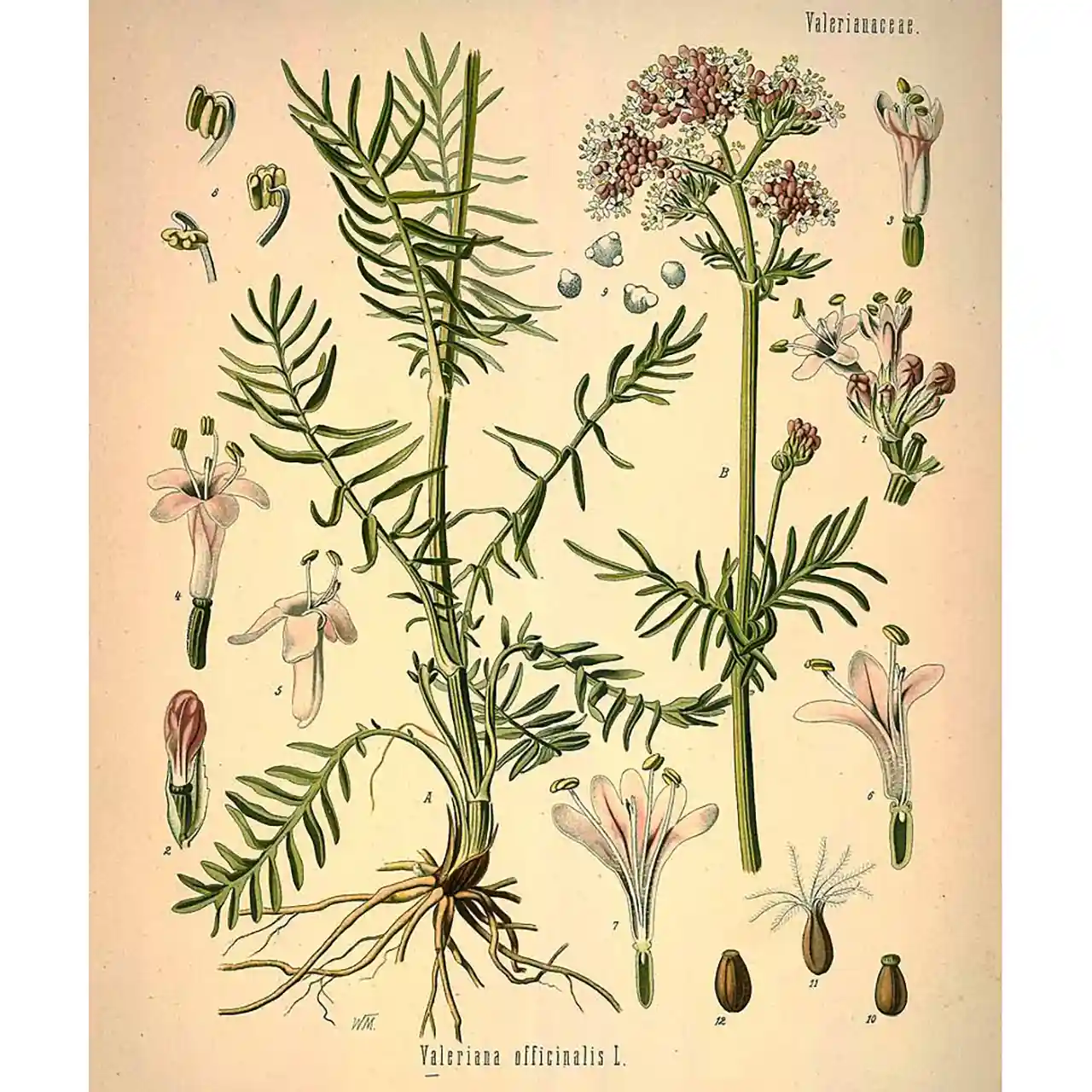
Valerian (Valeriana officinalis) is a perennial plant belonging to the honeysuckle family. The species is native to Europe and temperate parts of Asia and has since become naturalised elsewhere. Valerian grows mainly in damp places, such as along riverbanks, in wet grassland and on the edges of woods. The plant has pinnate leaves, consisting of several narrow leaflets. In summer, small white to pale pink flowers appear in broad umbels. Underground, valerian forms a short rhizome with many fine roots. For this product, the dried root sections have been cut into small pieces.
Traditional use
Valerian root has featured in European herbals and apothecary inventories for centuries. The strongly scented root was used in preparations such as decoctions, powders and tinctures, and was stored and traded as a distinctive aromatic raw material.
Dit kruid heeft een plaats binnen de Herbal medicine. Deze verwijzing betreft uitsluitend de cultuurhistorische achtergrond en is geen uitspraak over werking of effectiviteit.
Taste, smell and appearance
Sliced valerian root consists of irregular, fibrous pieces in shades of beige, grey and light brown. The dried root has a very distinctive scent: earthy, herbaceous and somewhat musky. Some people also detect a slight cheesy note in it. As a herbal infusion, valerian root has an earthy, woody and slightly bitter taste. The aroma remains distinctly present and the mouthfeel is dry rather than smooth. The infusion is usually light yellow-brown to brown in colour. Valerian can be combined with milder herbs such as camomile or lemon balm, but it retains its own distinct character even in a blend.
Fun fact 🐈
The strong scent of valerian root isn’t always appreciated by people in the same way, but some cats find it irresistible. That’s why dried valerian root is also used in cat toys, much like the better-known catnip.