



Description
Origin & botany
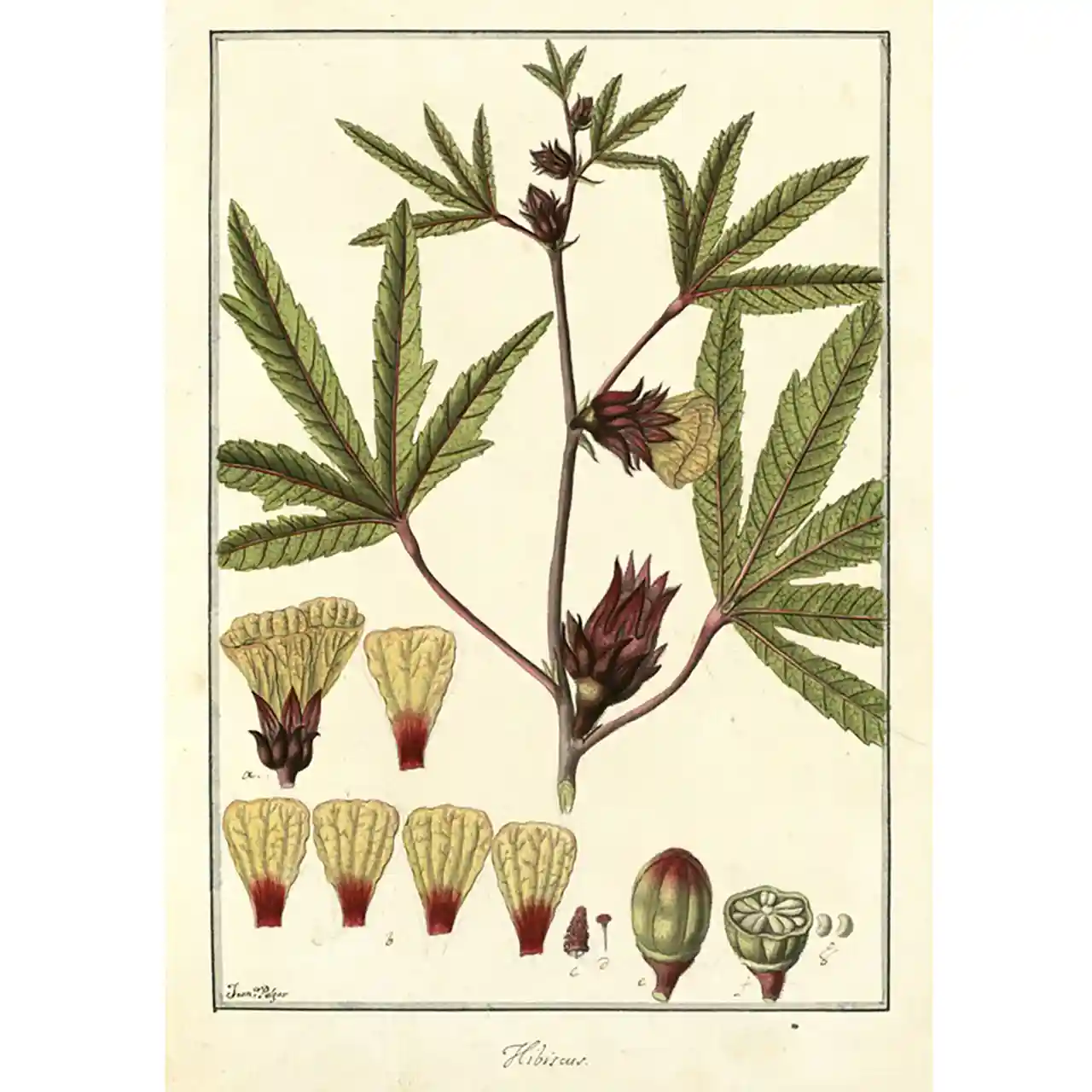
Hibiscus (Hibiscus sabdariffa), also known as roselle, belongs to the mallow family. The plant has long been cultivated in tropical and subtropical regions of Africa, Asia and Central America, amongst others. After flowering, firm, red-coloured calyxes develop around the fruit. These are harvested and dried, and form the raw material that is usually sold as hibiscus blossom. The natural red colour remains clearly visible even after drying.
Traditional use
Dried hibiscus calyxes have long been used in various parts of the world to make hot and cold drinks. In Egypt and Sudan, the drink is known as karkade, whilst similar preparations are called bissap in West Africa and agua de Jamaica in parts of Latin America. In Egypt, karkade is also served at social and festive occasions, including weddings.
Taste, aroma and appearance
Dried hibiscus has a dark red to burgundy appearance and a fruity, slightly floral aroma. When steeped in hot water, it quickly produces a clear ruby-red to deep red herbal infusion. The flavour is distinctly fresh and tart, with notes of cranberry, redcurrant and other red fruits. The mouthfeel can be slightly astringent. Hibiscus can be enjoyed on its own as a caffeine-free herbal infusion, but its colour and tartness also make it a good fit for fruity blends, cold infusions or iced tea.
Fun fact 🌺
What is commercially known as hibiscus blossom consists, botanically speaking, mainly of the enlarged calyx surrounding the fruit. It is therefore not the delicate petals, but these sturdy red calyx parts that impart colour and flavour to the infusion after drying.