



Description
Origin & botany
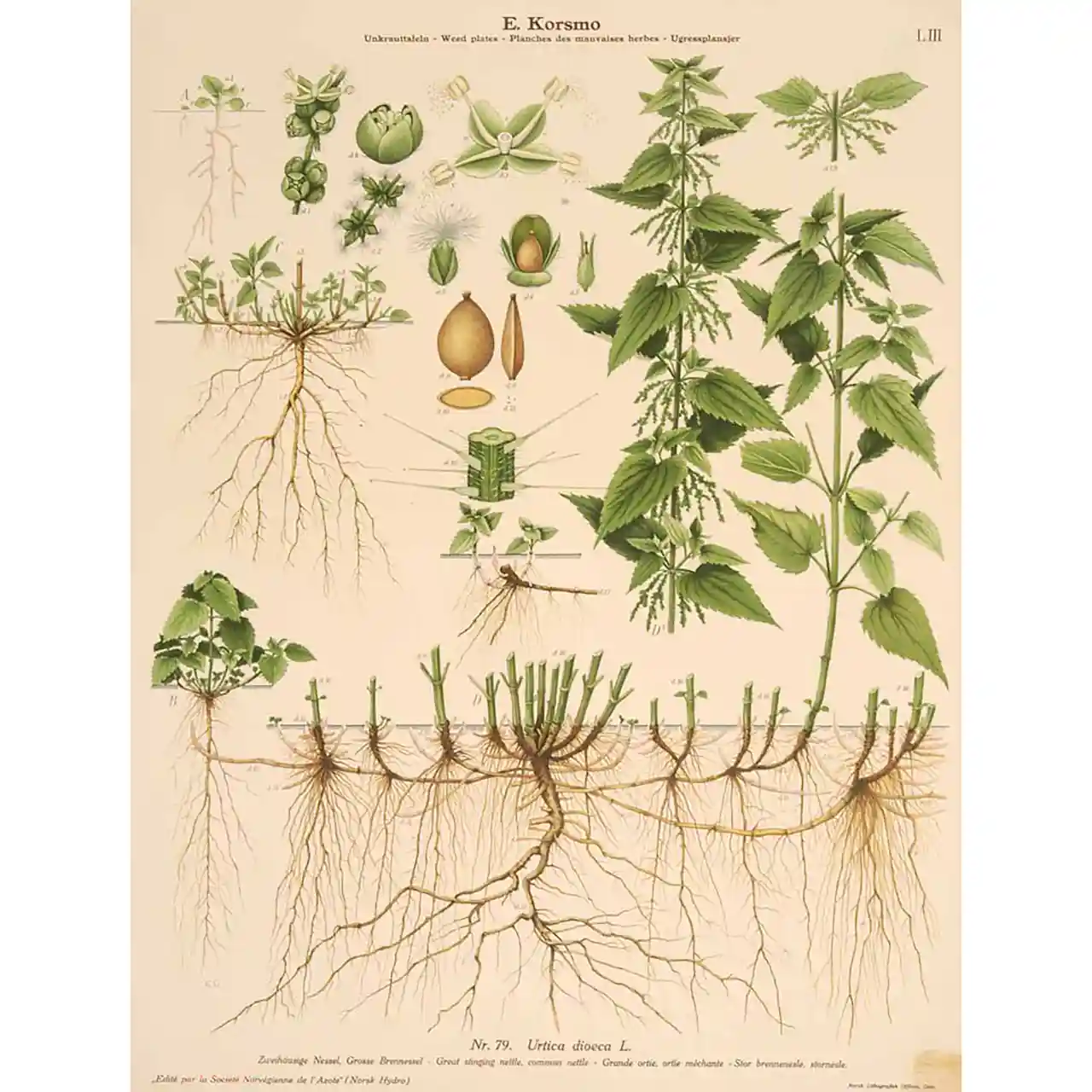
Stinging nettle (Urtica dioica) is a perennial plant that occurs naturally across large parts of Europe and Asia. The plant often grows in nutrient-rich soil and is recognisable by its pointed, coarsely serrated leaves. The fresh stems and leaves are covered in stinging hairs. These fine, brittle hairs break on contact and release an irritating liquid. For this product, the leaves are dried and cut.
Traditional use
Young nettle leaves were formerly used in European cuisine as a spring vegetable, for example in soups, purées and dishes in which they served much the same purpose as spinach. Dried nettle leaves were also steeped in hot water to make a simple herbal infusion.
Dit kruid heeft een plaats binnen de Herbal medicine. Deze verwijzing betreft uitsluitend de cultuurhistorische achtergrond en is geen uitspraak over werking of effectiviteit.
Taste, aroma and appearance
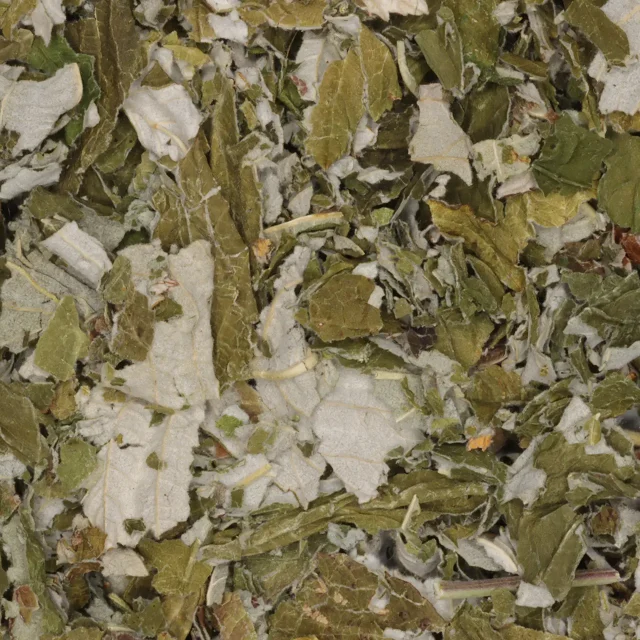
Dried nettle leaves consist of irregular, dull-green leaf fragments. The aroma is green and herbaceous, with a slightly earthy and hay-like note. As a herbal infusion, nettle has a gentle, full-bodied flavour reminiscent of spinach and green herbs. The aftertaste is mild and slightly earthy. The infusion usually takes on a pale greenish-yellow colour and pairs well with, for example, mint, lemongrass or camomile.
Fun fact 🧵
Nettle wasn’t just useful in the kitchen. Its stems contain long, strong fibres that resemble flax once processed. They were used for thread, rope and textiles: an unexpected second life for a plant best known for its stinging leaves.