


Description
Origin & botany
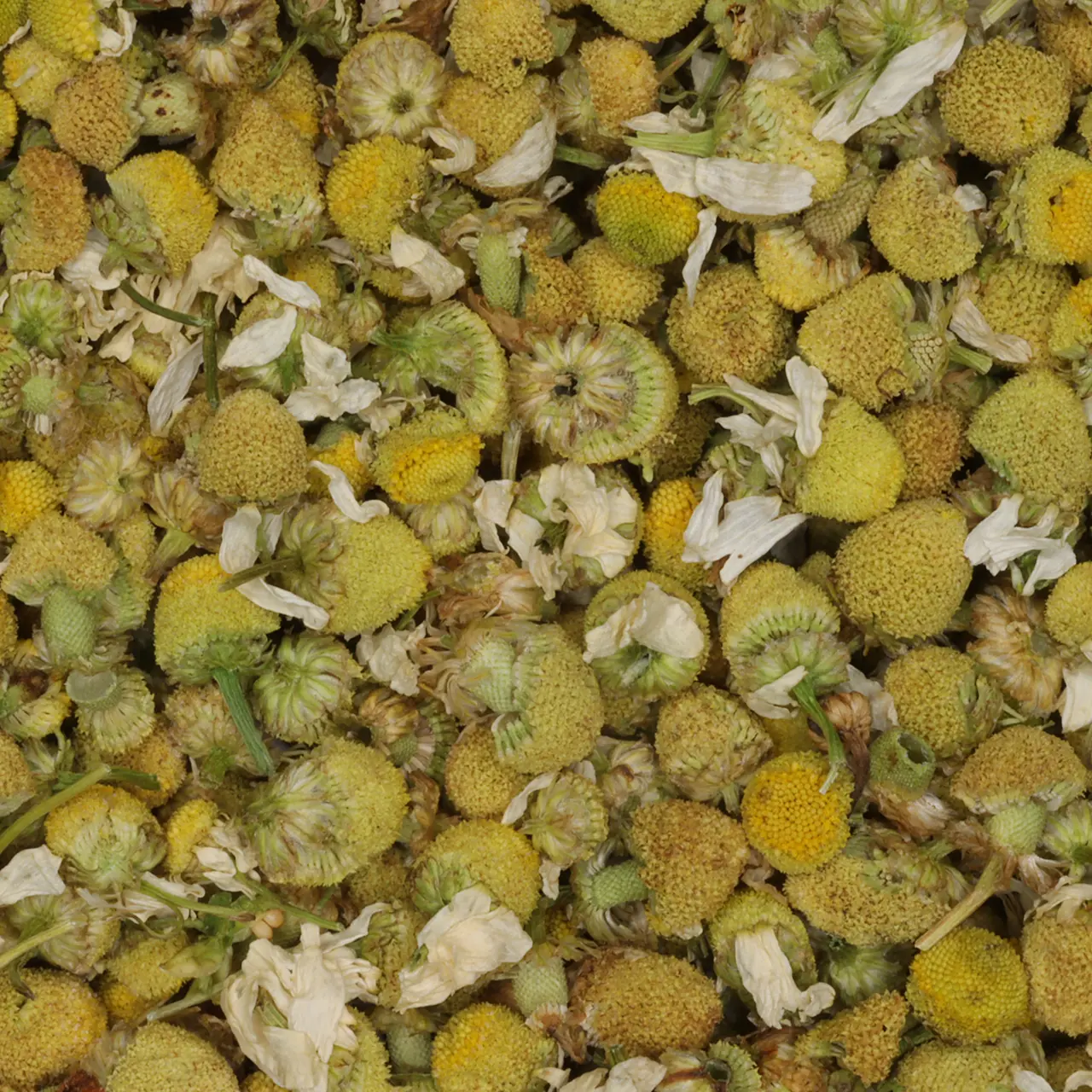
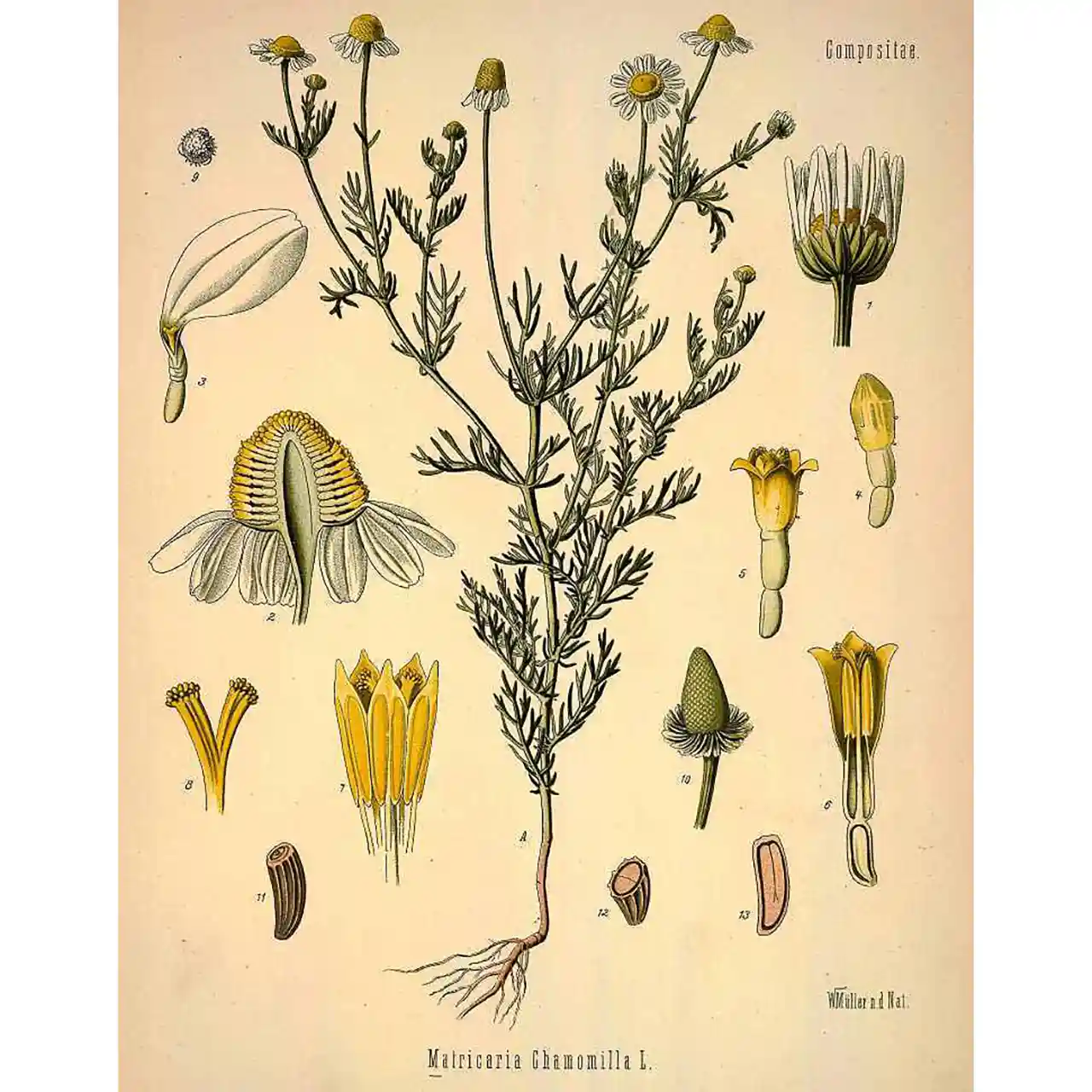
Chamomile (Matricaria chamomilla) is an annual plant belonging to the Asteraceae family. The flower heads consist of a yellow centre of small tubular flowers, surrounded by white ray florets. During flowering, these white petals often gradually droop downwards. The aromatic flower heads are harvested and dried for use as a herb. Organically grown chamomile blossoms are used for this product.
Traditional use
Dried chamomile flowers have been used as a herbal infusion for centuries. In European households, chamomile was also known as a fragrant plant used in baths, compresses and various personal care products. These uses form part of the herb’s long cultural history.
Dit kruid heeft een plaats binnen de Herbal medicine. Deze verwijzing betreft uitsluitend de cultuurhistorische achtergrond en is geen uitspraak over werking of effectiviteit.
Taste, aroma and appearance
The dried blossoms consist of small yellowish-white flower heads and have a warm, floral scent with apple-like and honey-sweet notes. As a herbal infusion, chamomile produces a clear, golden-yellow drink with a soft, rounded flavour and a slightly herbal undertone. The mouthfeel is mild and generally not very astringent. Chamomile can be prepared on its own as a herbal infusion, but is also combined with aromatic herbs such as mint, lemon balm or lavender.
Fun fact 🍏
The Dutch word ‘kamille’ derives via the Latin chamaemelon from the Ancient Greek khamaimēlon, literally ‘ground apple’. This ancient name refers to the distinctive apple-like scent of the blossom.