





Description
From Tencha to Matcha
Matcha is not just ordinary green tea that has been ground into powder. The raw material is called tencha, and it requires special handling right from the field. The concept itself, incidentally, predates Japan: in China, people were already drinking whisked powdered tea during the Song Dynasty. There, the practice fell out of use in the centuries that followed; in Japan, it persisted and evolved into what we know today.
In the final weeks before harvest, the young shoots are largely protected from direct sunlight. In Uji, this has traditionally been done using honzu: mats made of reeds and straw, stretched over the bushes—a method that has been in use there for centuries. Nowadays, black netting is more commonly hung over the fields. The effect is the same: the leaves turn a deeper green, and the flavor becomes rounder, with more umami and less astringency.
After picking, the leaves are briefly steamed, which stops oxidation. Then comes the step that distinguishes tencha from sencha: the leaves are not rolled, but dried flat. Stems and coarse veins are removed, and what remains is a thin, brittle leaf that crumbles as soon as you touch it. It is precisely this brittleness that makes powder possible—rolled leaves could never be ground so finely.
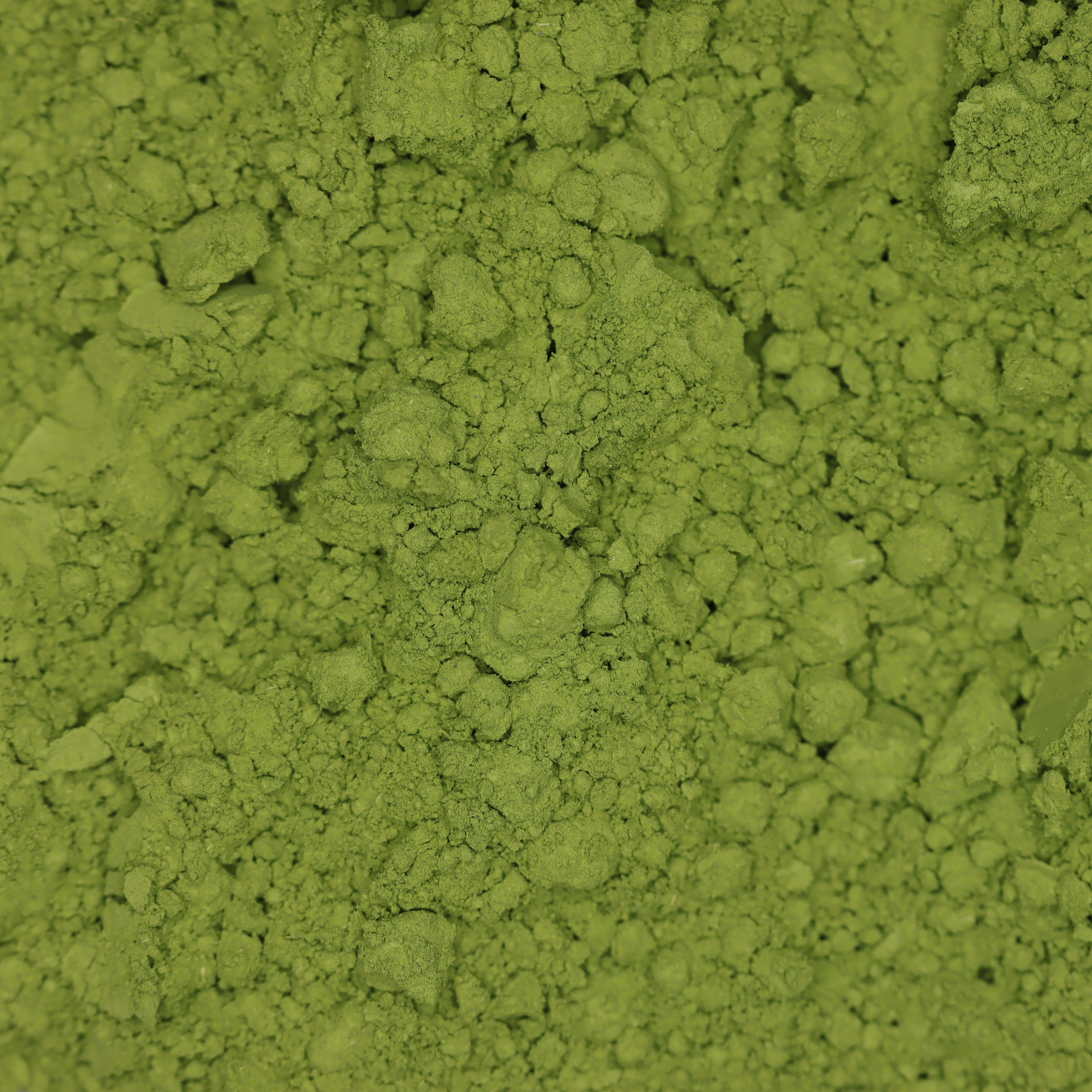
Grinding is traditionally done in a granite mill that rotates at about thirty to sixty revolutions per minute, yielding approximately thirty to forty grams per hour: one can of matcha in an hour. That slowness is not merely for nostalgia’s sake. Grinding generates frictional heat, and too much heat compromises the aroma and the bright green color. Modern mills operate faster, but usually with active cooling. Particle size also matters: finer powder looks greener and feels smoother on the palate. Thus, the grinding technique influences color, aroma, mouthfeel, and foam formation—though it does not single-handedly determine quality.
Color, Taste, and Price as Indicators
The harvest time makes a difference. The first spring harvest yields the youngest and most prized leaves; matcha made from these often tastes rounder and smoother, with plenty of umami and little pronounced bitterness. Later harvests yield a more robust, bitter, or slightly drier profile. This doesn’t make them any less useful: in a matcha latte, ice cream, or baked goods, a stronger tea character is actually welcome, as it holds its own against milk and sugar.
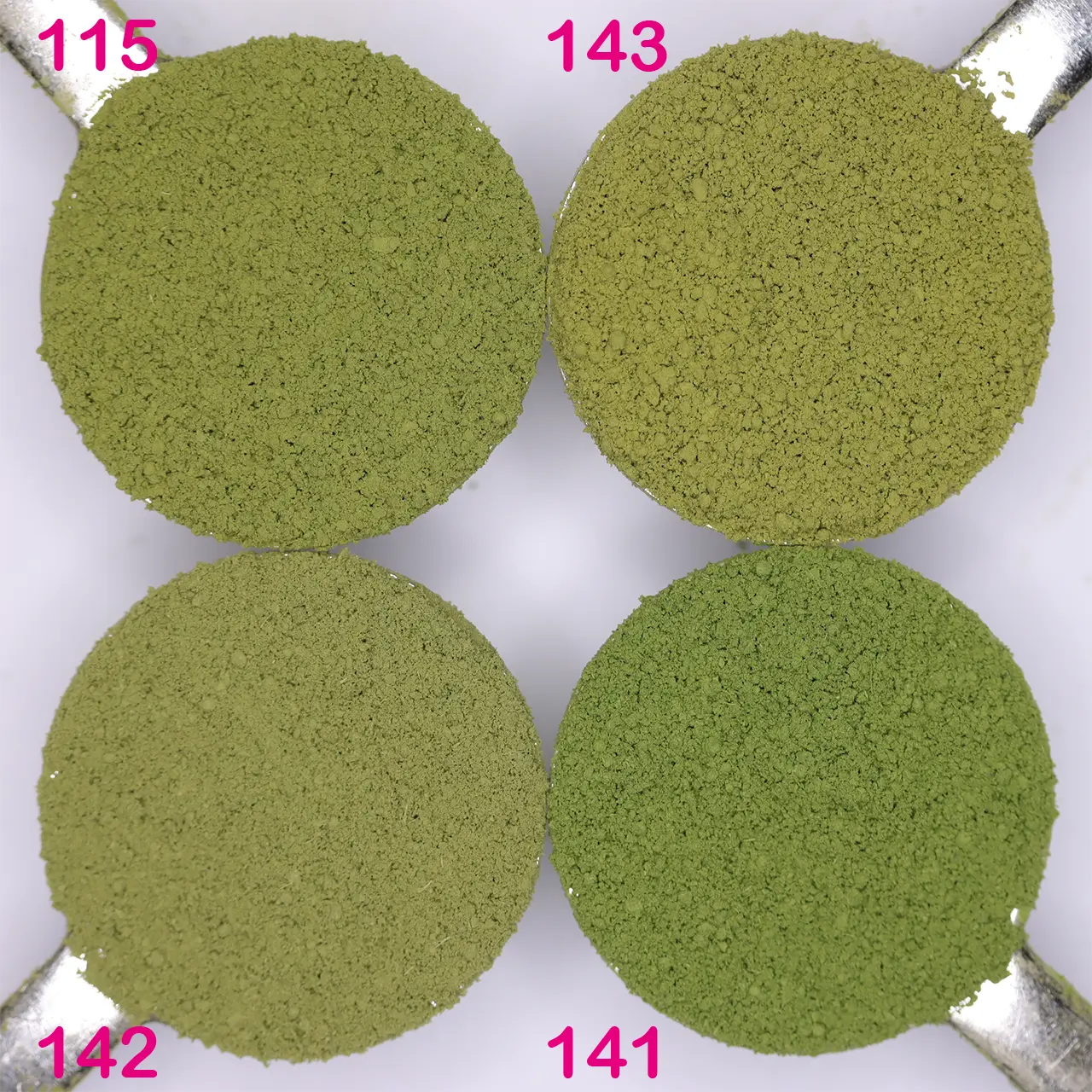
Color and flavor are indicative, but they don’t guarantee anything. Fresh, high-quality matcha is usually bright to deep green. A yellow-green or olive-like hue may indicate a later harvest, older leaves, lighter shading, the processing method, or simply a loss of freshness—and cultivar and growing conditions also play a role. Good matcha may well have some bitterness, as long as it is balanced with umami, mild sweetness, and a smooth mouthfeel.
Then there’s the price. An early harvest, intensive shading, selective picking, careful sorting, and slow grinding all cost money, and on top of that come origin, organic farming and certification, scarcity, and packaging. A higher price therefore often indicates more expensive leaves and more processing. Whether it’s also the best matcha depends on what you plan to use it for.