


Description
Origin & botany
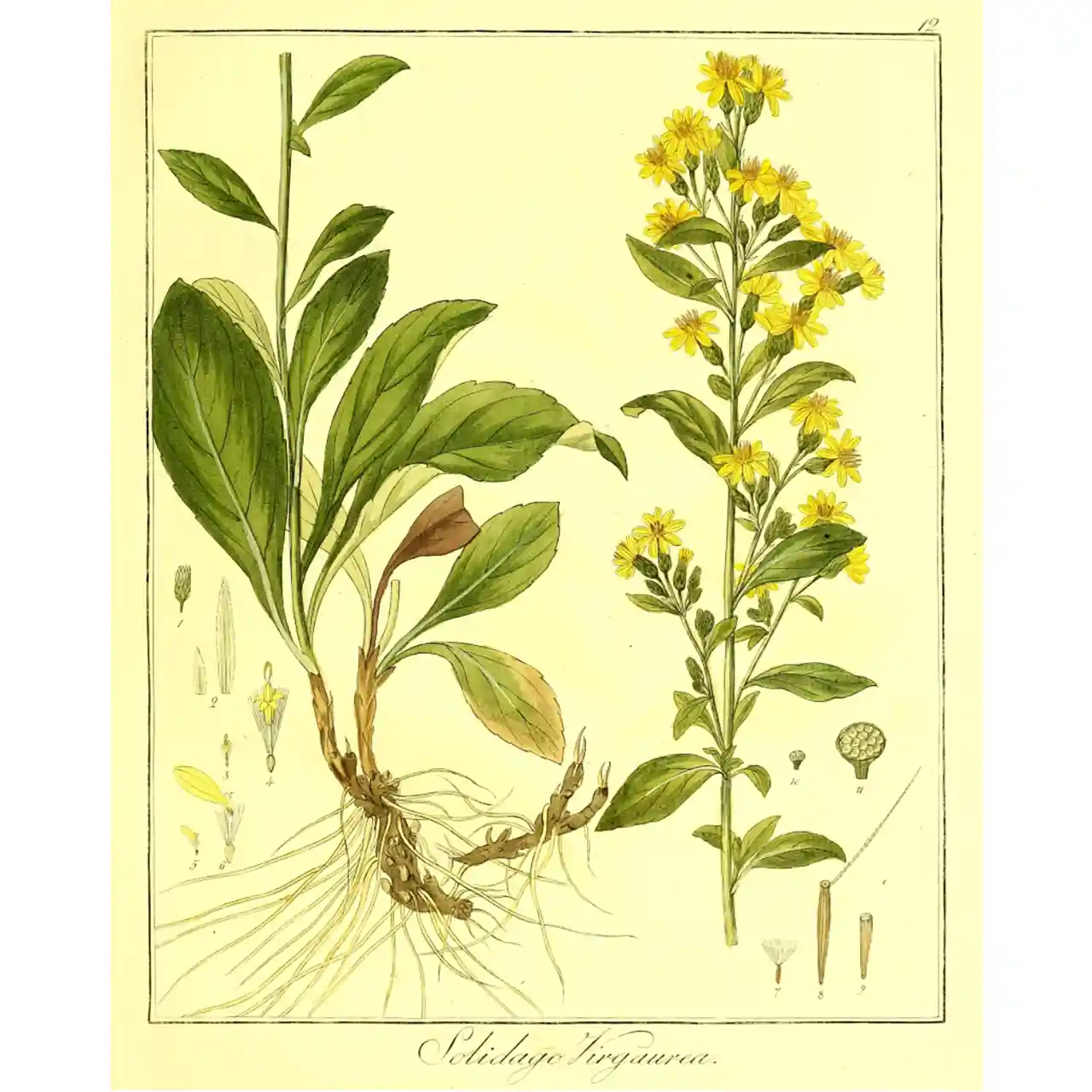
Common goldenrod (Solidago virgaurea) is a perennial plant belonging to the Asteraceae family. The plant has upright stems with elongated leaves. Small golden-yellow flower heads appear at the top: clusters of tiny florets that together resemble a single flower.
The species occurs naturally across large parts of Europe and in temperate regions of Asia. It grows in places such as light woodlands, grasslands, heathland and on sunny slopes.
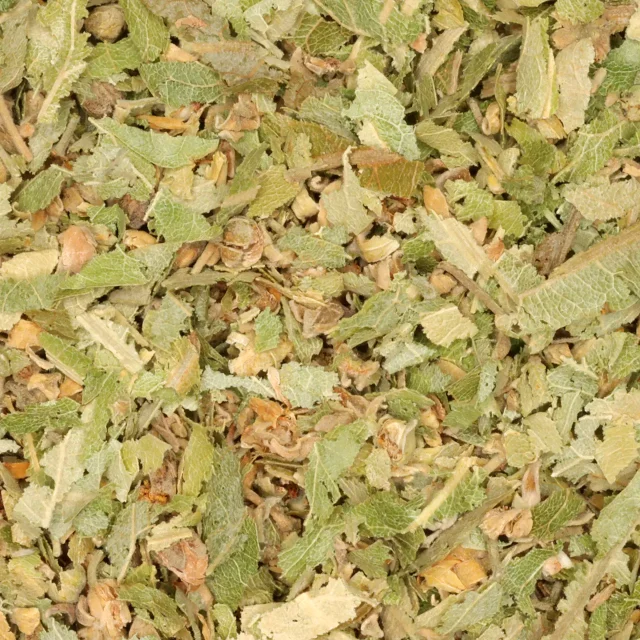
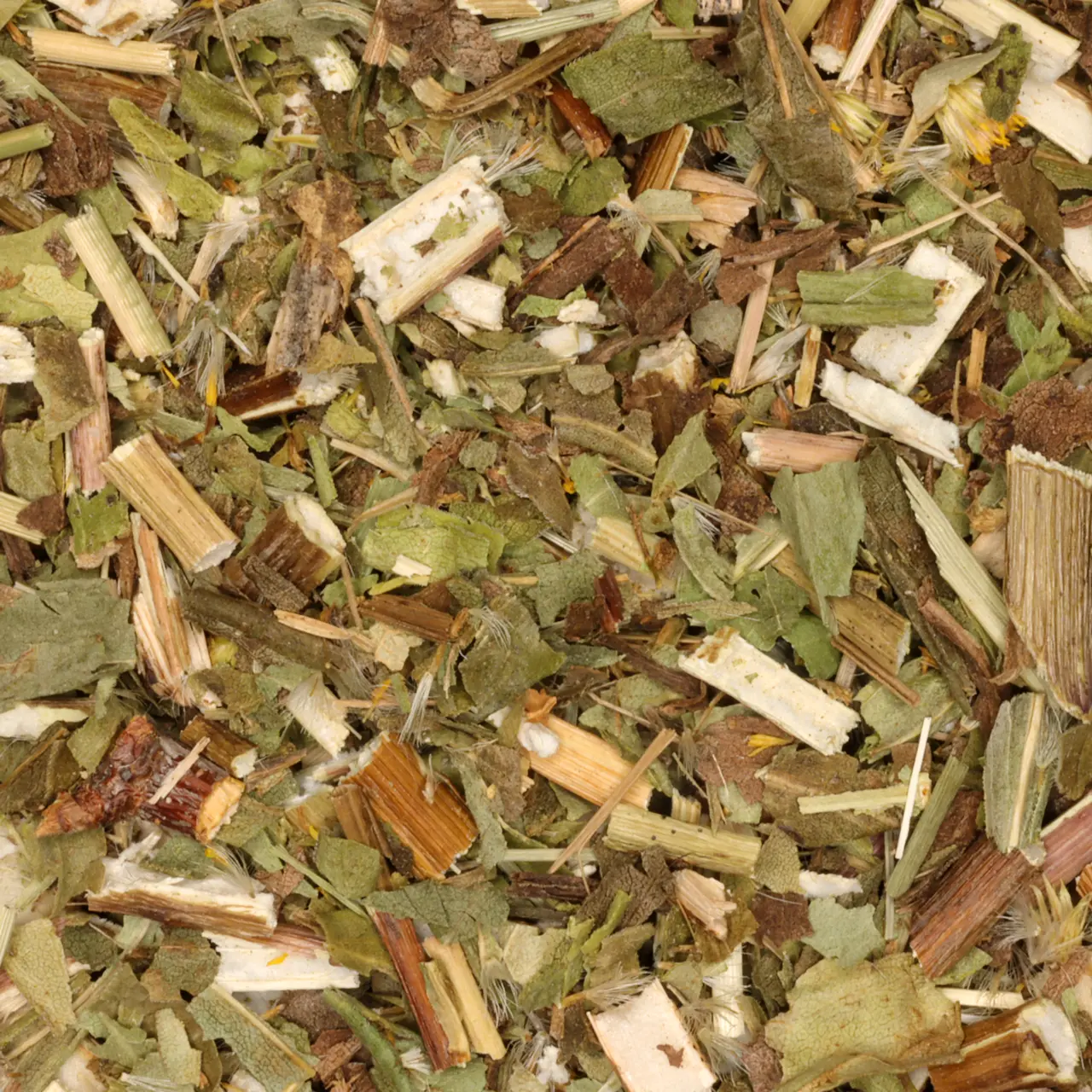
The dried, above-ground parts of the plant are used for this herbal product. The cut herb therefore consists of a natural mixture of leaves, fine stem pieces and small fragments of the yellow flowers.
Traditional use
Goldenrod has been mentioned in European herbal books for centuries. The flowering herb was described in these texts as a raw material for infusions and other herbal preparations, both on its own and in combination with other plants.
Dit kruid heeft een plaats binnen de Herbal medicine. Deze verwijzing betreft uitsluitend de cultuurhistorische achtergrond en is geen uitspraak over werking of effectiviteit.
Taste, smell and appearance
Dried goldenrod consists of irregular green to green-brown pieces of leaf and stem. Small yellow-brown flower fragments may be found amongst them. The aroma is subtle, dry and green-herbal.
As a herbal tea, goldenrod has a mild, grassy and slightly earthy flavour with a hint of bitterness. Due to its subtle character, the herb can be brewed on its own or incorporated into a blend with more aromatic leaves, flowers and herbs. As the product consists solely of goldenrod, it is naturally caffeine-free.
Fun fact 🌼
The large, golden-yellow clumps of goldenrod found along railway embankments and on wasteland in the Netherlands often consist of Canadian goldenrod or late goldenrod. These species are native to North America. The herb in this product is true goldenrod, a different species that occurs naturally in the Netherlands and is much less common.