





Description
Origin & botany
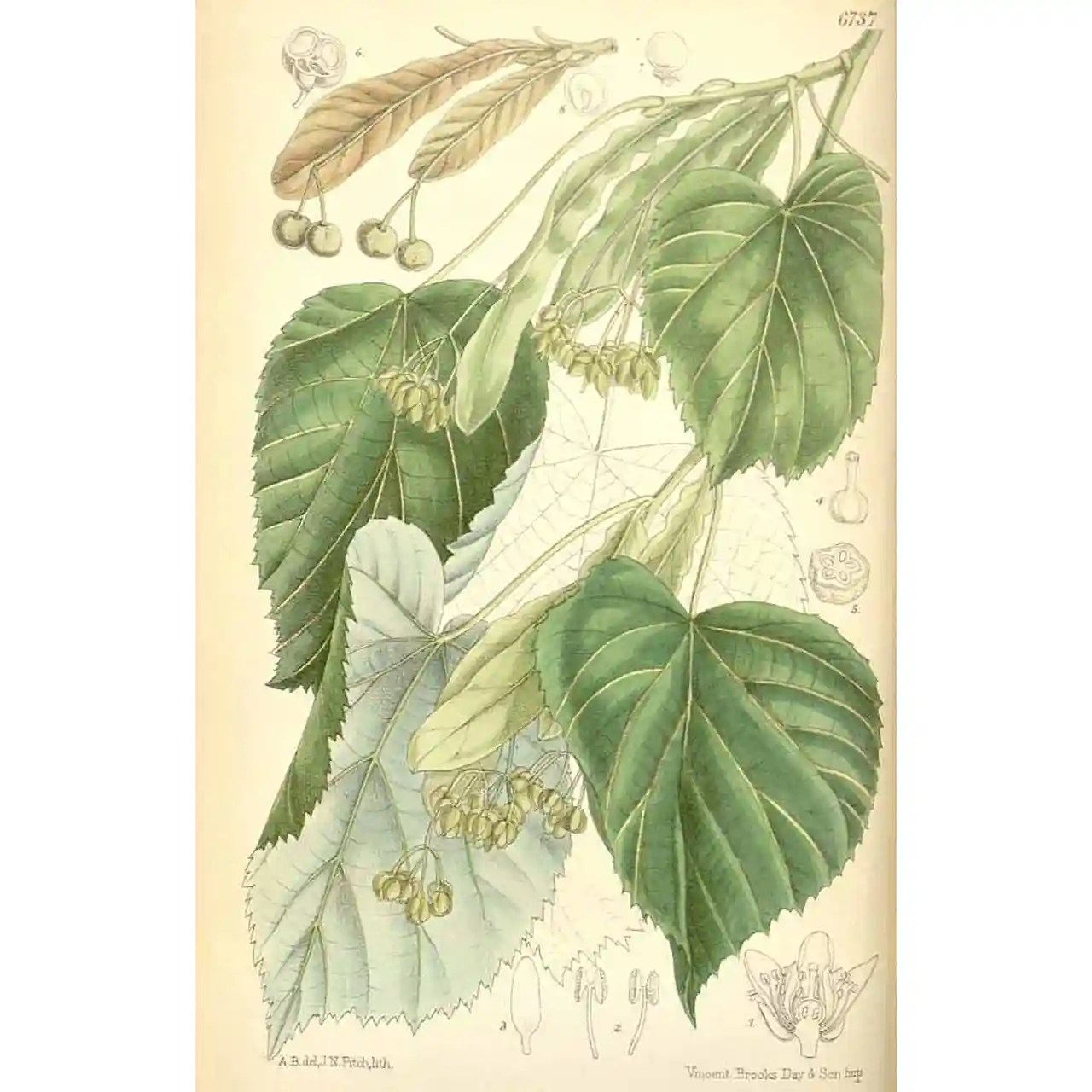
Linden blossom consists of the dried inflorescences of trees from the genus Tilia. The small, pale yellow to creamy-white flowers grow in hanging clusters on a distinctive, elongated bract. During flowering, they give off a sweet, floral scent.
For this product, depending on the batch available, we use blossoms from Tilia cordata Mill. or Tilia tomentosa Moench. Tilia cordata, the small-leaved lime, has relatively small, heart-shaped leaves. Tilia tomentosa, the silver lime, is most easily recognised by the densely hairy, silver-grey underside of its leaves. The exact botanical species of the current batch is listed in the ingredients.
Both species are deciduous lime trees native to Europe and neighbouring parts of Western Asia, although their natural ranges differ by species. Lime trees are also widely planted as avenue, park and urban trees. For use as a herbal infusion, the inflorescences – usually together with the accompanying bract – are harvested and dried.
Traditional use
Linden blossom has a long history as a household herbal remedy: the inflorescences were gathered, dried and stored to be used later to brew a warm herbal drink. The floral infusion was served both on its own and blended with other fragrant herbs.
Dit kruid heeft een plaats binnen de Herbal medicine. Deze verwijzing betreft uitsluitend de cultuurhistorische achtergrond en is geen uitspraak over werking of effectiviteit.
Taste, aroma and appearance
When brewed, lime blossom produces a light, golden-yellow herbal infusion with a refined aroma of honey and summer blossoms. The flavour is mild and floral, with a slightly sweet note and a gentle, subtle herbal undertone. The mouthfeel remains smooth and the aftertaste is light. Thanks to its unassuming character, lime blossom is ideal for drinking on its own. In a herbal blend, its gentle floral notes can also be combined with, for example, camomile, lemon balm or mint, without the lime blossom quickly becoming overpowering.
Fun fact 🍃
Each cluster of lime blossoms has an elongated, light bract. When the fruits are ripe later on, this bract acts like a tiny wing: it catches the wind and helps the cluster of fruits to disperse from the tree.