



Description
Origin & botany
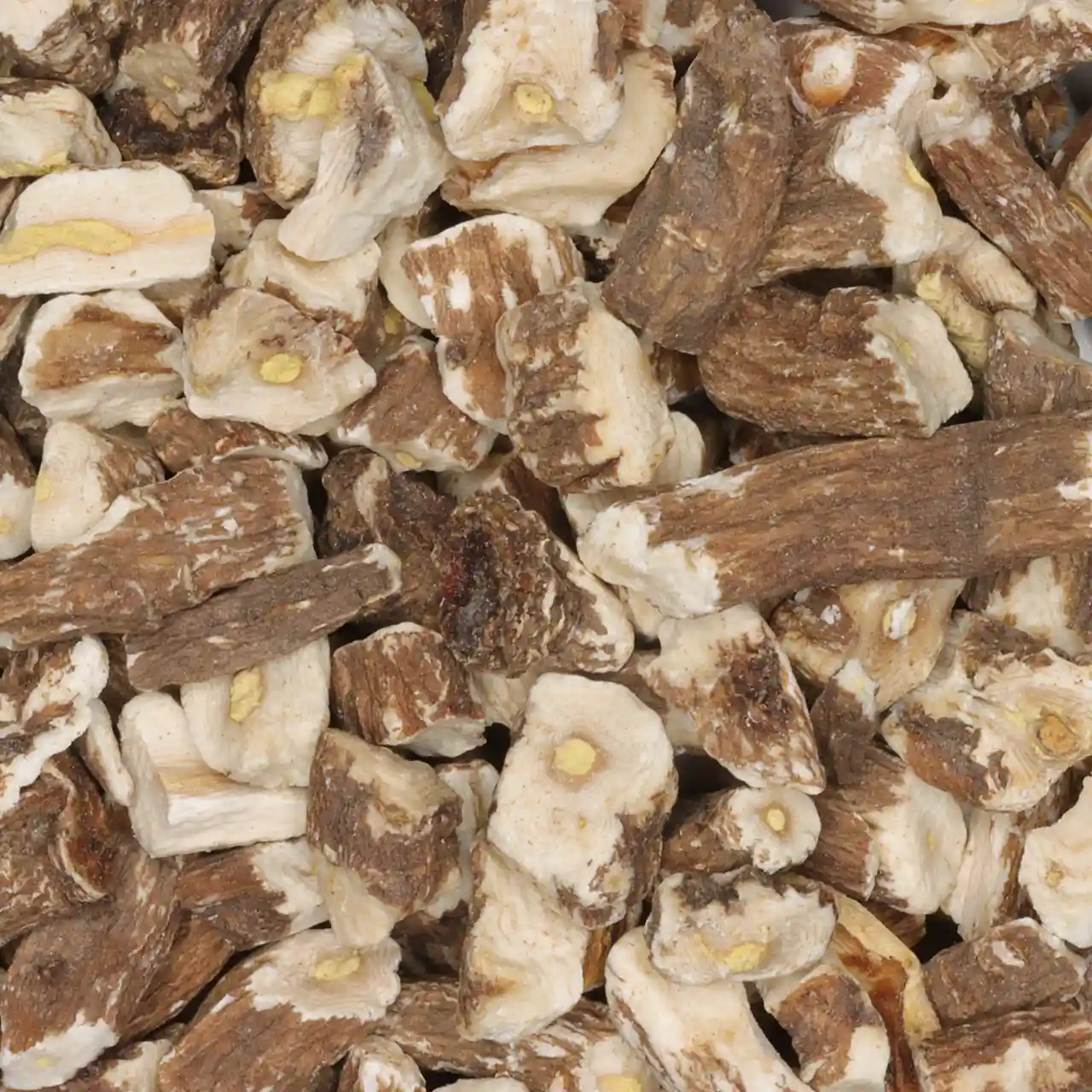
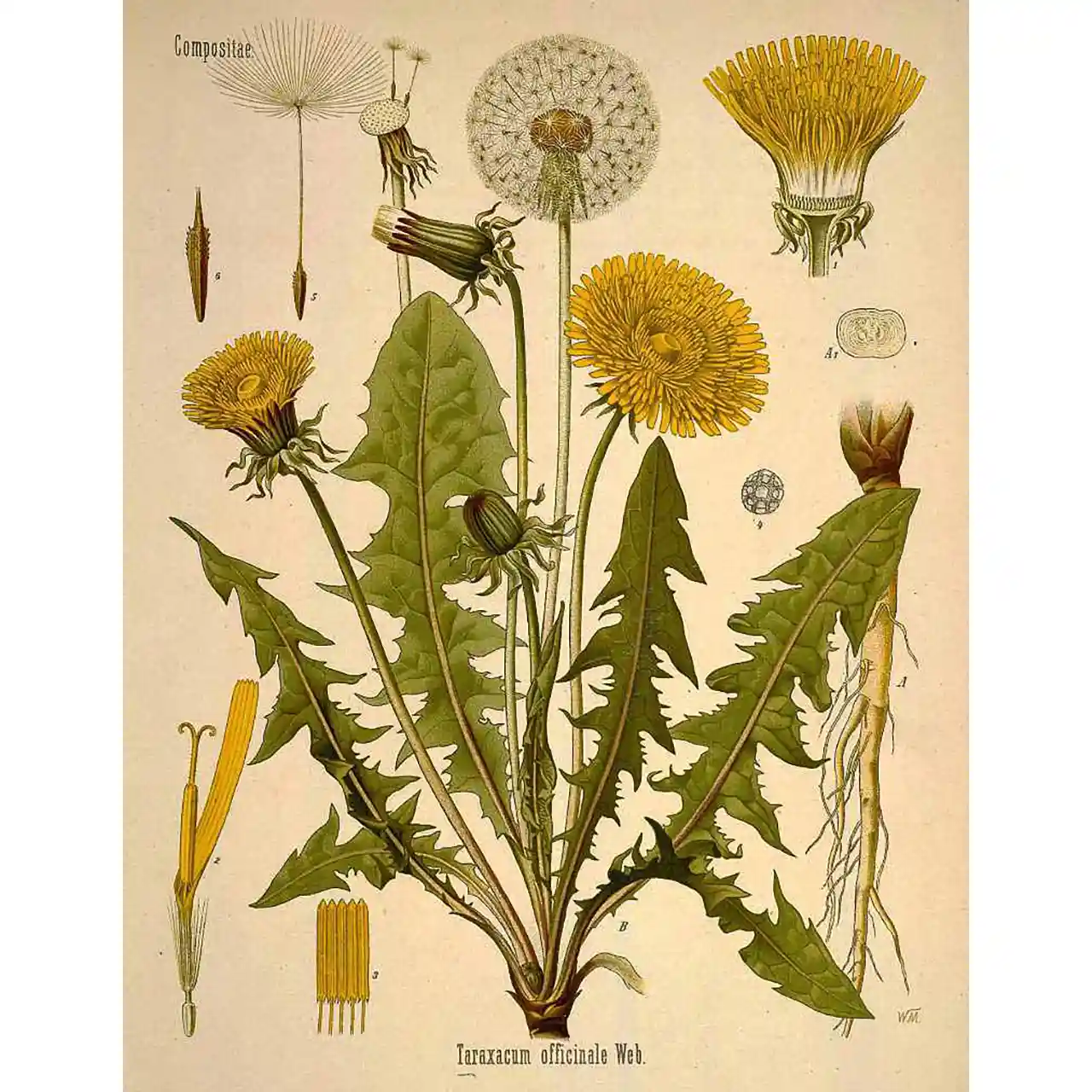
The dandelion (Taraxacum officinale) is a perennial plant belonging to the Asteraceae family, the same family as lettuce and sunflowers. The leaves form a rosette close to the ground. The familiar yellow flowers emerge from the centre, later turning into fluffy seed heads. Beneath the rosette grows a sturdy taproot: a single thick main root that runs straight downwards. For this product, the root is dried and cut into pieces. The root pieces are organically grown and unroasted.
Traditional use
Dandelion root has traditionally been used in herbal preparations and, at times, as a foodstuff. Dried root was also roasted and ground as a coffee substitute, often in combination with chicory. That historical use refers to roasted root; the root pieces in this product, however, are unroasted.
Taste, aroma and appearance
The dried root consists of irregular, fibrous pieces with natural variations in colour. The aroma is mild and earthy. When used as a herbal infusion, the unroasted root has an earthy, herbaceous and slightly bitter flavour. Roasted notes of coffee, caramel or nuts are not characteristic of this product, as the root has not been roasted.
Fun fact 🌱
A dandelion can regrow after being pulled up if a piece of the root remains in the ground. A rosette of leaves can grow again from such a root remnant. This explains the well-known garden phenomenon whereby a dandelion sometimes returns, even when the plant above ground appeared to have been completely removed.