



Description
Origin & botany
Rose hips form from the lower part of the flower after the roses have finished flowering. As they ripen, they usually turn red to orange-red. This product consists of the organically grown, dried and cut outer skin of rose hips from one or more rose species. As the exact species is not specified, the botanical name is given as Rosa spp., which means ‘various species within the genus Rosa’.
The dried skin is used as a standalone herbal infusion and as a fruity base in blends. The drying process removes the fresh, juicy character, but the recognisable fruity and slightly tart notes are retained.
Traditional use
Rose hips were used in European kitchens to make jam, jelly, syrup and fruit drinks. The dried hips also found their way into homemade herbal infusions and fruit blends. During periods when citrus fruit was scarce, rose hip syrup was made in places such as Great Britain as a local alternative.
Dit ingrediënt heeft een plaats binnen de Herbal medicine. Deze verwijzing betreft uitsluitend de cultuurhistorische achtergrond en is geen uitspraak over werking of effectiviteit.
Taste, aroma and appearance
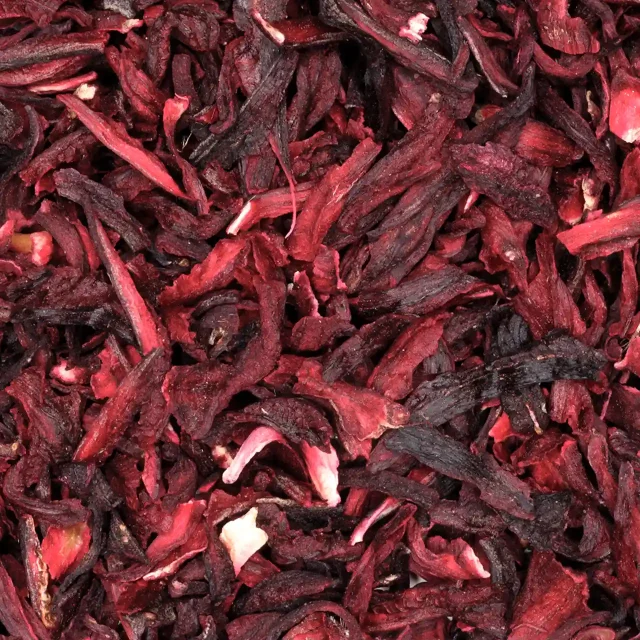
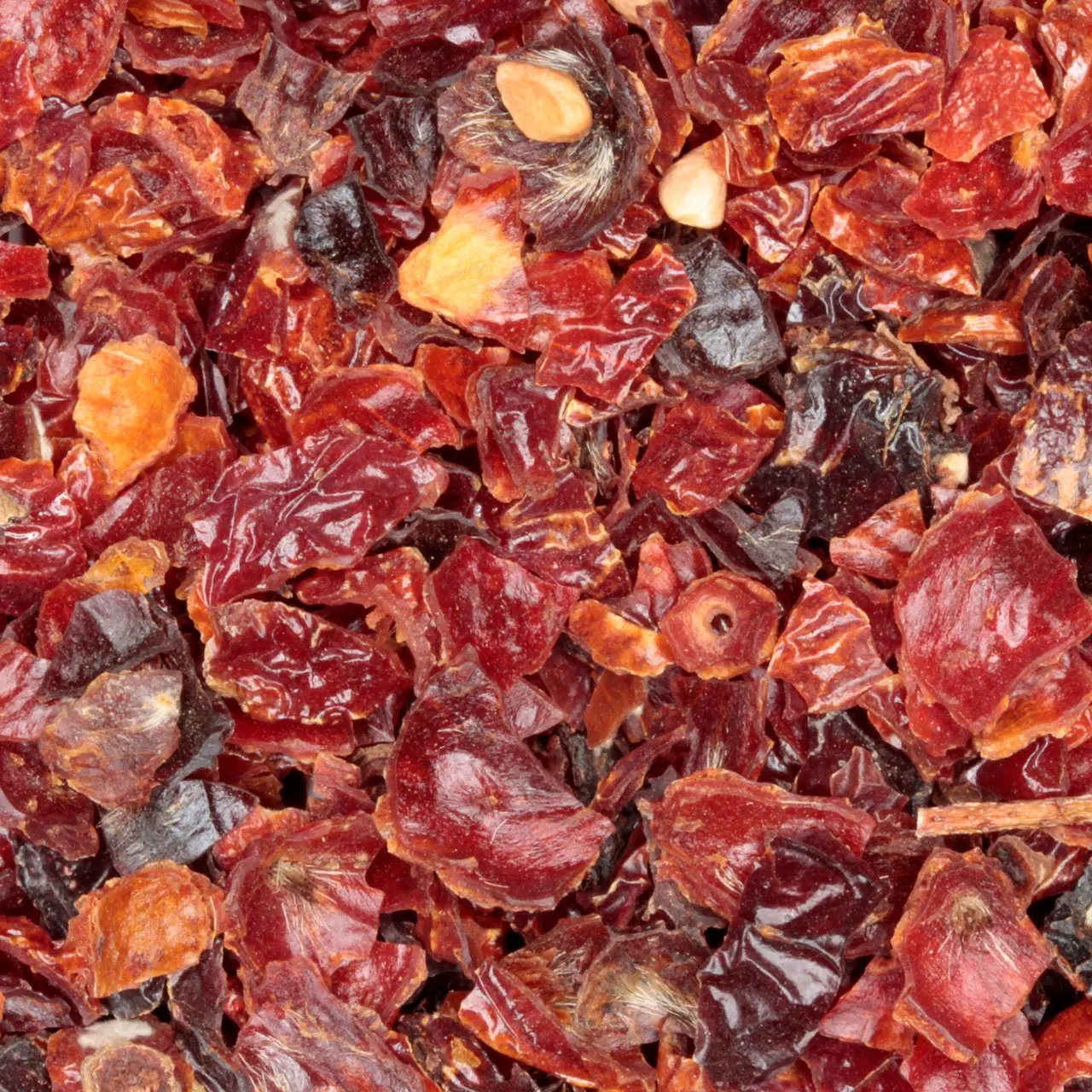
The sliced rosehip peel consists of irregular, thin pieces in reddish-brown, orange-red and sometimes dark brown shades. The dry aroma is mild and reminiscent of dried red fruits. When used as a herbal infusion, the peel imparts a gently fruity flavour with a mild, fresh-tart note and a light, natural sweetness. The mouthfeel remains quite light. The drink usually takes on a warm orange to reddish colour, depending on the quantity used and the steeping time.
Fun fact 🌹
What is commonly referred to as the fruit of the rose is, botanically speaking, a false fruit. The fleshy outer part develops from the receptacle, the part on which the petals were attached. The small, hard seeds inside are the actual fruits. Rosehip peel therefore consists of the dried husk surrounding those fruits.