




Description
Origin & botany
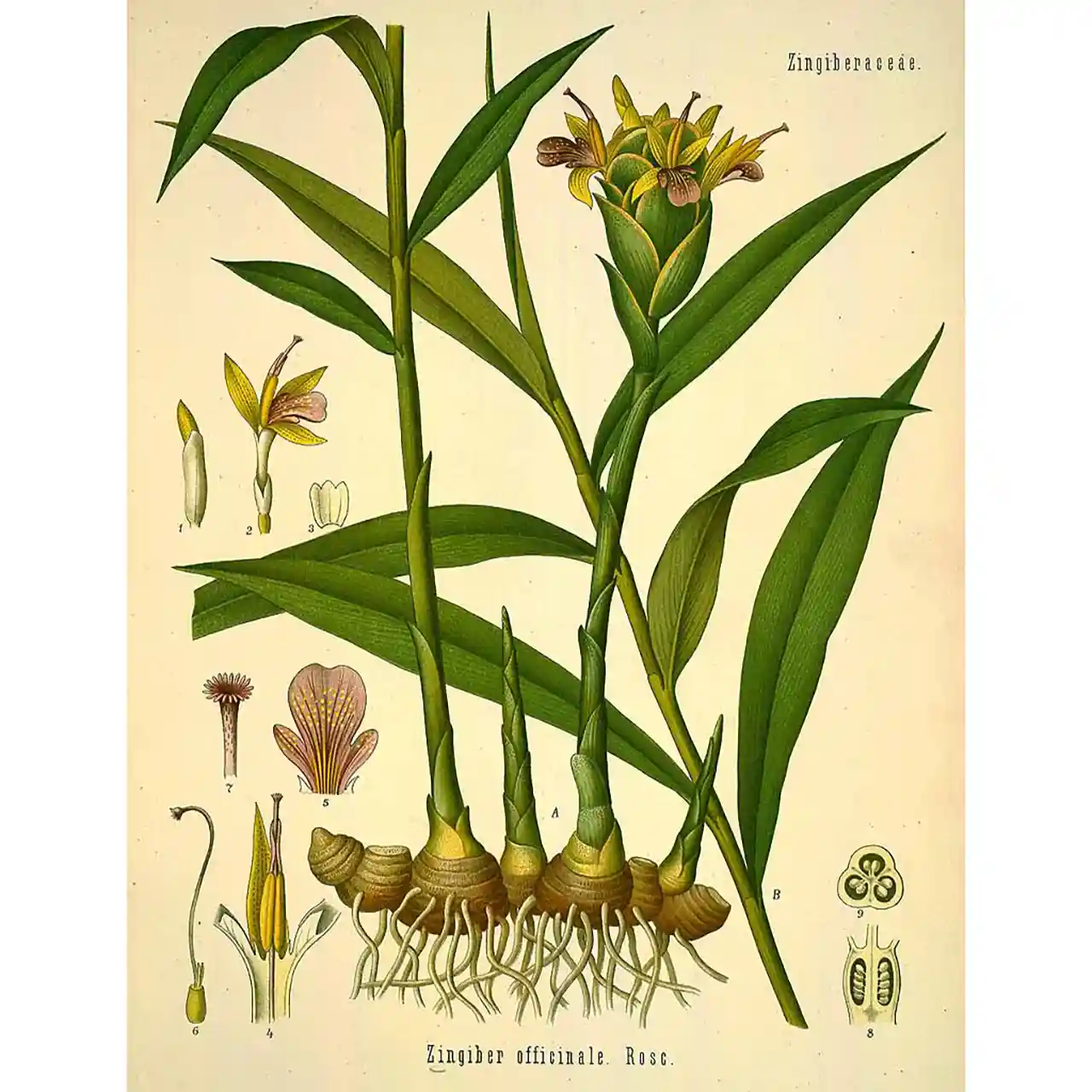
Ginger (Zingiber officinale) is a tropical plant generally believed to originate in South-East Asia. Today, the plant grows in many warm, humid regions. Above ground, it produces long, narrow leaves and yellow-green flowers. The part used is found underground and is called a rhizome: a thickened stem that is often mistaken for a root. After harvesting, this rhizome is dried and cut into pieces for this product.
Traditional use
Ginger has been used for centuries as a spice in dishes and drinks. In various Asian cuisines, it is used fresh, dried, pickled or candied. Dried ginger also became known in Europe via ancient trade routes. There, the spice was used in, amongst other things, gingerbread, pastries, beer-like drinks and hot spice mixtures.
Deze specerij heeft een plaats binnen de Herbal medicine, Ayurveda en de Traditional Chinese Medicine (TCM). Deze verwijzing betreft uitsluitend de cultuurhistorische achtergrond en is geen uitspraak over werking of effectiviteit.
Taste, aroma and appearance
The dried pieces are fibrous and usually pale yellow to beige, with the occasional darker edge. Their aroma is fresh and spicy, with a distinctive citrus note. When used as a herbal infusion, ginger produces a clear, golden-yellow to amber-coloured drink. The flavour starts off fresh and aromatic, before developing a distinct, tingling sharpness. This lingers for a while as a warm sensation in the mouth. Ginger is naturally caffeine-free and can be brewed on its own or combined with, for example, lemon, mint, cinnamon, turmeric or star anise.
Fun fact 🔥
Dried ginger doesn’t taste exactly the same as fresh ginger from the greengrocer’s. During the drying process, some of the natural flavour compounds change. As a result, dried ginger often has a drier, longer-lasting sharpness, whilst fresh ginger usually tastes juicier and fresher.