


Description
Origin & botany
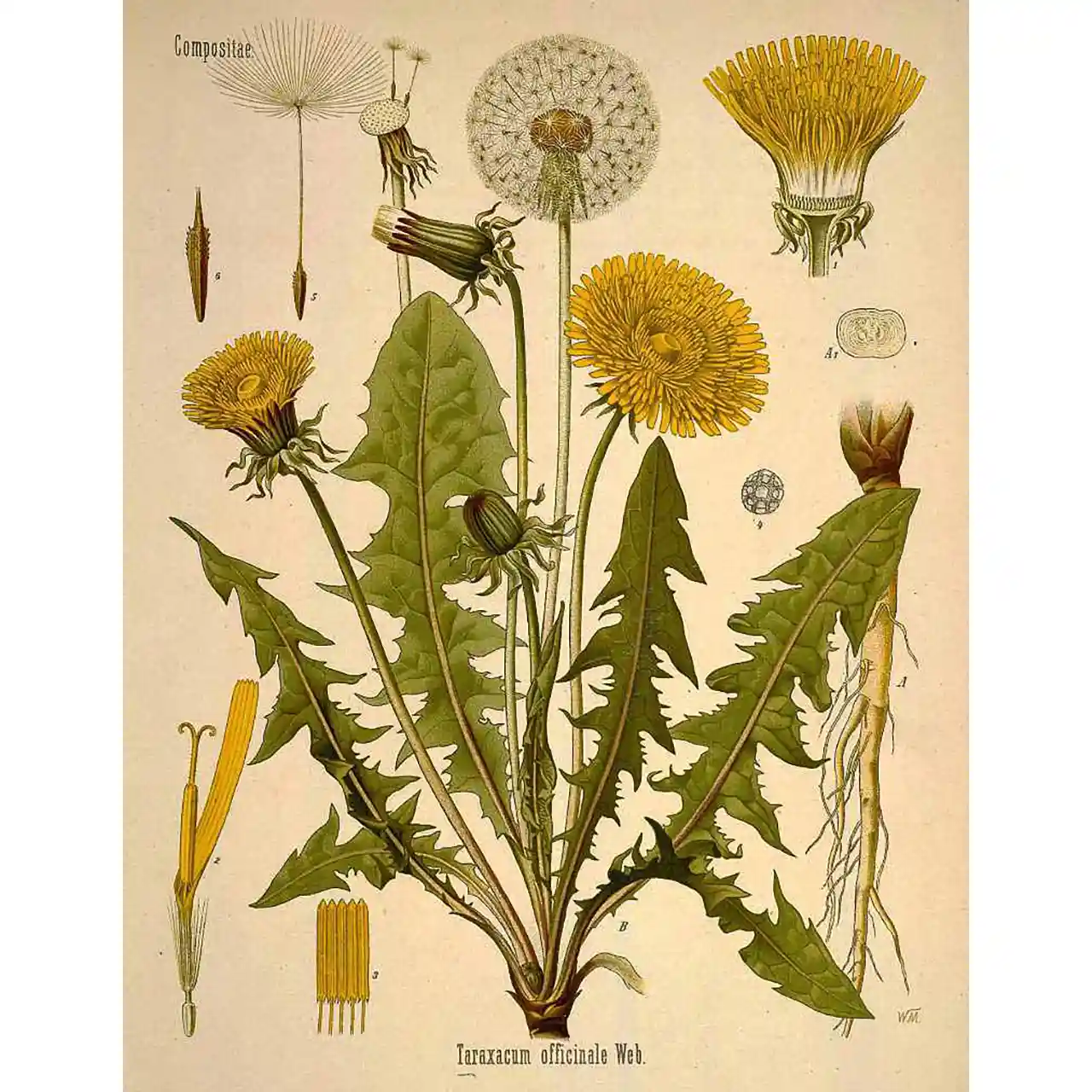
The dandelion (Taraxacum officinale) is a perennial plant belonging to the Asteraceae family. In plants of this family, a flower often appears to be a single unit, but it actually consists of many small florets. The elongated, often deeply lobed leaves grow in a rosette just above the ground. From this, hollow stems emerge bearing yellow flower heads, which later develop into the familiar round, fluffy seed heads.
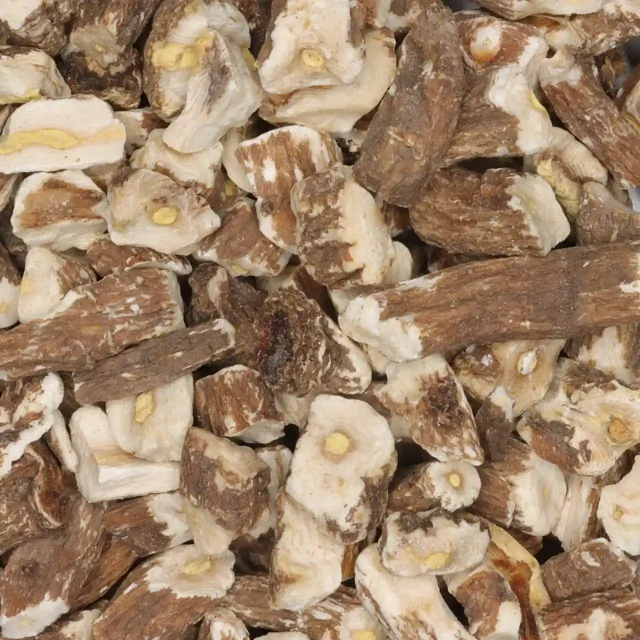
The plant has a sturdy taproot and is commonly found in grasslands, verges, gardens and other open areas. Dandelions occur in many closely related forms, which are difficult even for botanists to distinguish from one another. For herbal products, the broad collective name Taraxacum officinale is therefore often used.
Traditional use
Dandelion has a long history as an edible and medicinal plant. In parts of Europe, the young leaves in particular were used in salads, vegetable dishes and spring meals. Dried dandelion leaves were also used for herbal infusions and as an ingredient in herbal blends.
Dit kruid heeft een plaats binnen de Herbal medicine. Deze verwijzing betreft uitsluitend de cultuurhistorische achtergrond en is geen uitspraak over werking of effectiviteit.
Taste, aroma and appearance
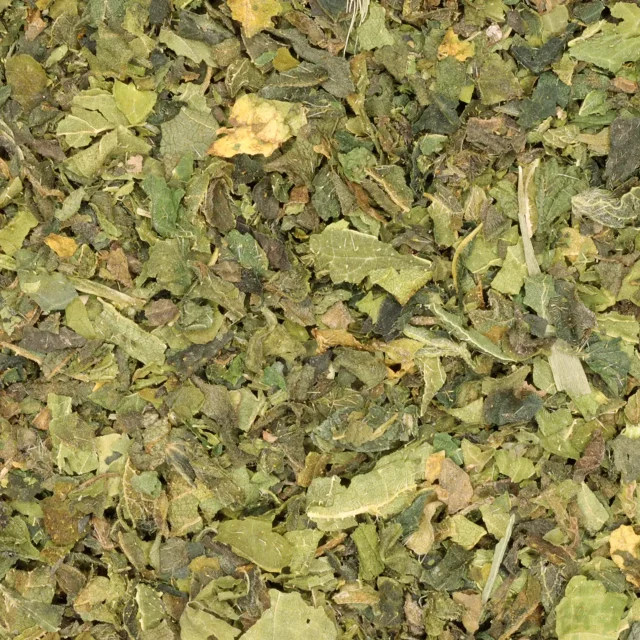
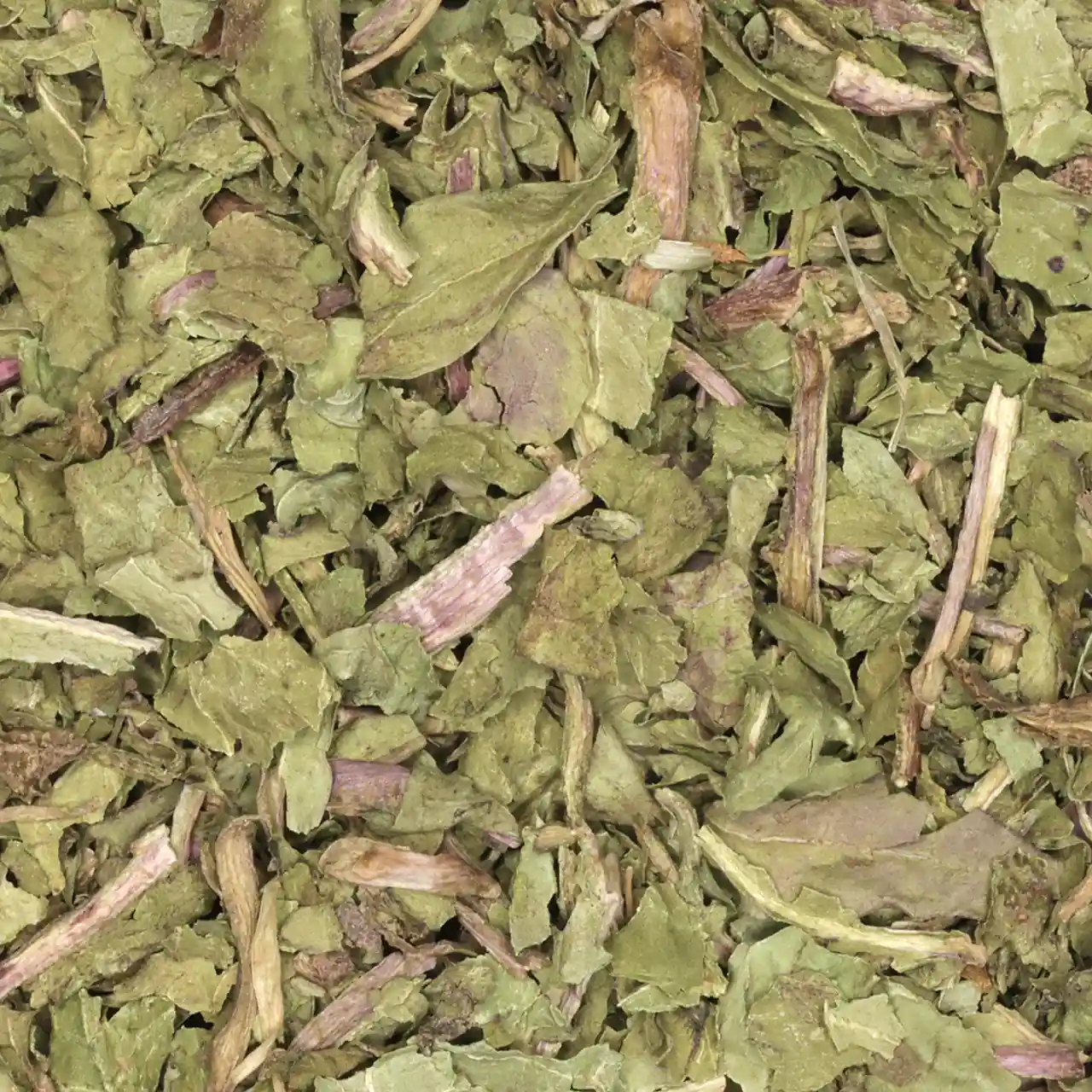
The dried dandelion leaf consists of coarsely cut, olive- to brown-green leaf pieces. Interspersed amongst these are lighter and sometimes purplish-brown sections of the leaf stalks. The aroma is subtle, dry and distinctly herbaceous.
When brewed as a herbal infusion, the leaves have a green, slightly earthy and mildly to distinctly bitter flavour. It can be used on its own or combined with aromatic herbs such as mint, lemon balm, fennel or lemongrass. Even in a blend, its grassy, herbaceous character remains recognisable.
Fun fact 🌱
Many dandelions can produce seeds without the flower first being pollinated. In this way, a seed – almost like a cutting – can grow into a plant that is genetically almost identical to the parent plant. Partly because of this, there are a great many closely related varieties that look very similar on the outside.