



Description
Origin & botany
Aronia berries are the fruits of the black chokeberry (Aronia melanocarpa), a deciduous shrub belonging to the rose family. The species is native to eastern North America. The shrub blooms with small white flowers in clusters and later bears dark purple to almost black fruits.
The black chokeberry belongs to the same plant family as the apple, pear and rose. From the twentieth century onwards, the shrub was also cultivated on a larger scale in parts of Northern and Eastern Europe. There, the fruits are processed into juice, jam and other fruit products, amongst other things.
Traditional use
In North America, aronia berries were traditionally used as food, including in dried form. In Europe, the dark fruits later found their way mainly into juice, jam and other fruit preparations. Dried aronia berries are also used in fruit teas and blends.
Taste, aroma and appearance
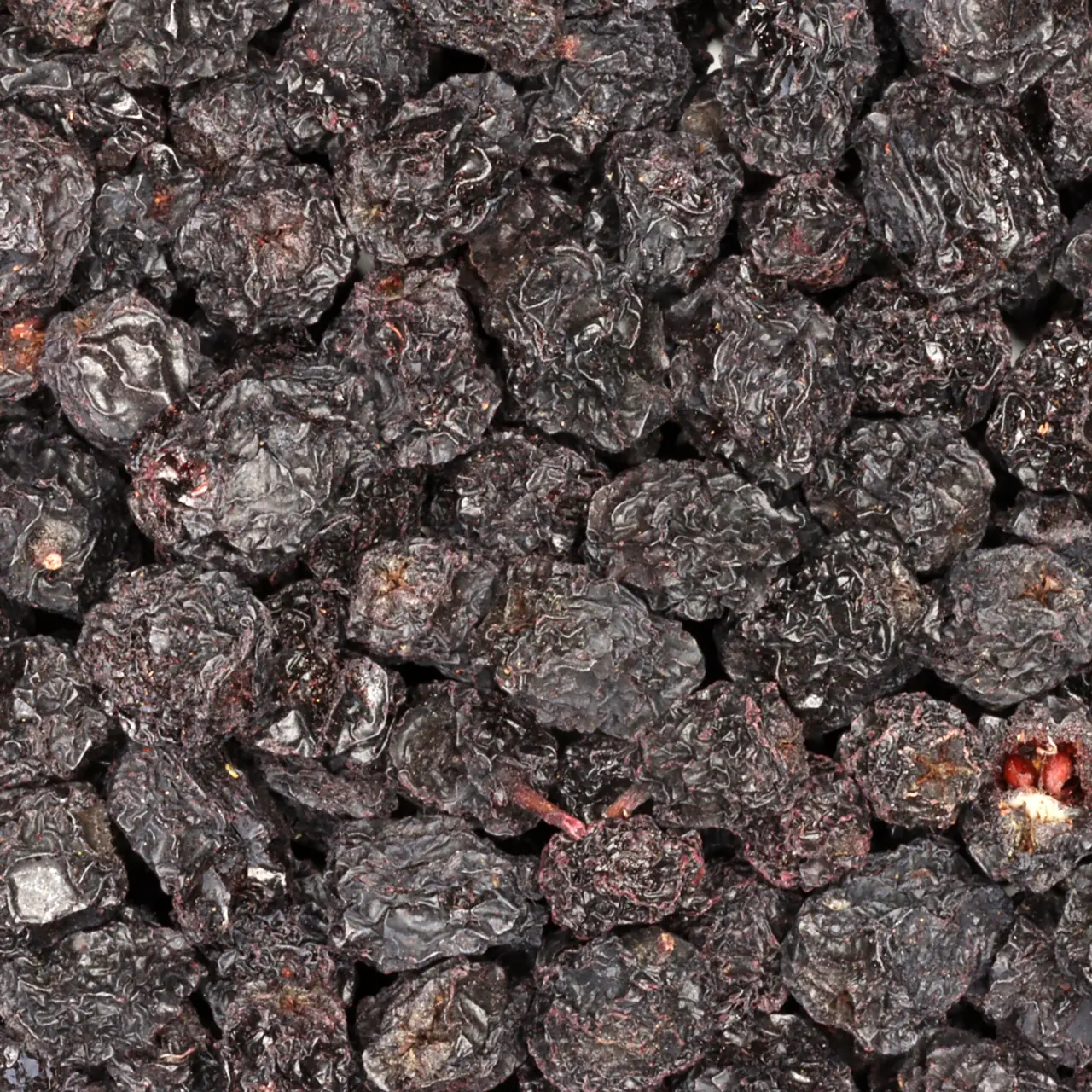
These organic aronia berries are whole and dried. They are small, wrinkled and dark purple to almost black. At first glance, this makes them resemble small currants or raisins.
The flavour is dark and fruity, slightly tart and distinctly astringent. This creates a dry, astringent sensation in the mouth, similar to that experienced with strong black tea. Their natural sweetness is subtle.
These caffeine-free fruits can be brewed on their own as a herbal infusion or used in a blend. They pair well, for example, with apple, rosehip, hibiscus and other fruits. Whole dried berries release their flavour and colour gradually; lightly crushing them before brewing helps both to be released more easily.
Fun fact 🍎
Although we call them aronia berries, botanically speaking they are not true berries. They are small drupes: the same type of fruit as an apple, with seeds in the centre. That makes the Dutch name ‘appelbes’ (apple berry) remarkably apt.