


Description
Origin & botany
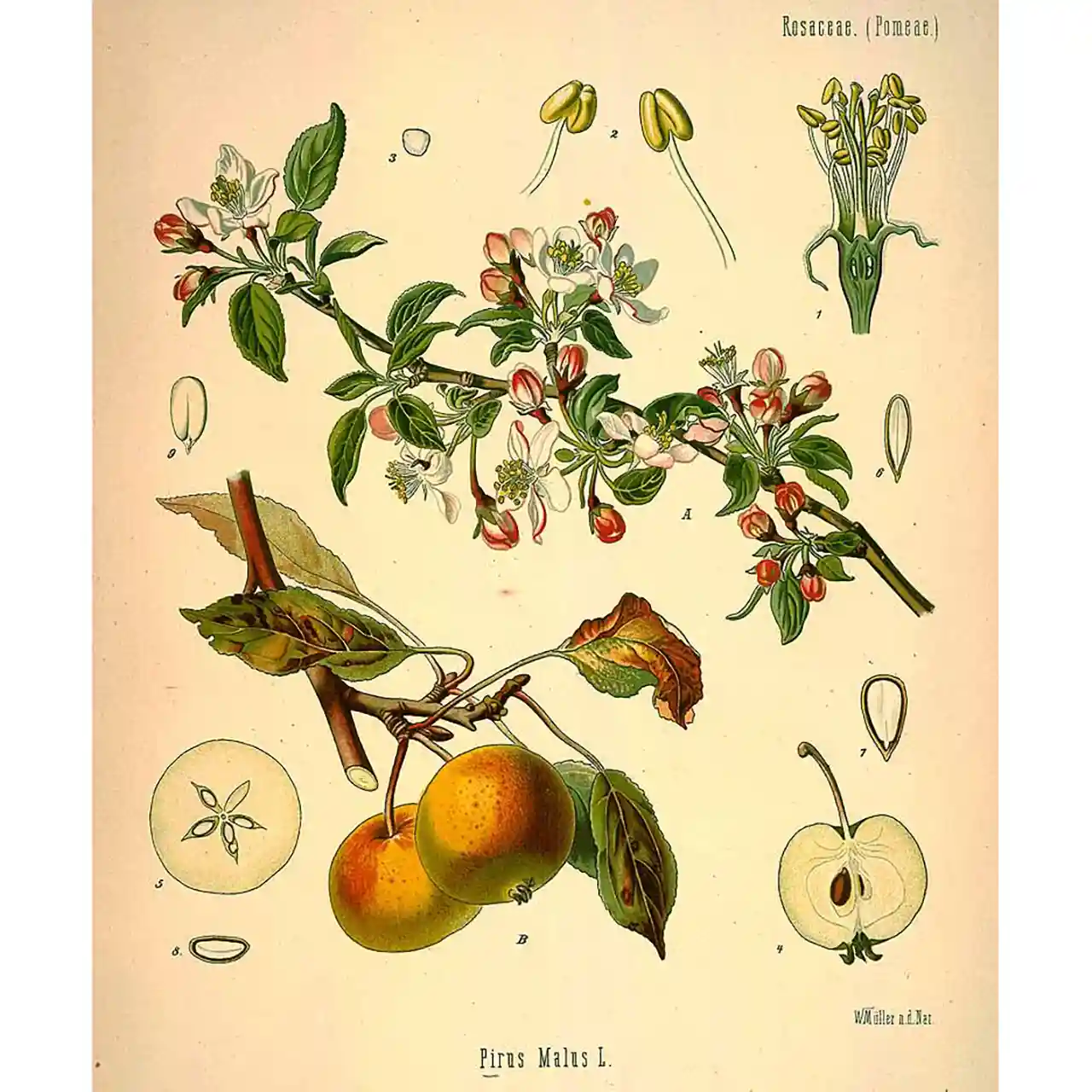
The edible apple (Malus domestica) belongs to the rose family. This plant family also includes well-known fruits such as the pear, cherry and strawberry. The modern apple evolved from various wild apple species. Malus sieversii, a wild apple from Central Asia, is considered an important ancestor.
Over the course of many centuries, apples spread westwards, partly along ancient trade routes. Through selection and cultivation, the wide variety of apples we know today emerged, ranging from crisp and tart to distinctly sweet.
Traditional use
In regions with a temperate climate, the apple has been a familiar orchard fruit for centuries. Apples were dried so that part of the harvest could be preserved well beyond the picking season. Dried pieces thus found their way into the larder and were used in dishes, cakes, compotes and, later, in fruit mixtures and herbal infusions.
Taste, aroma and appearance
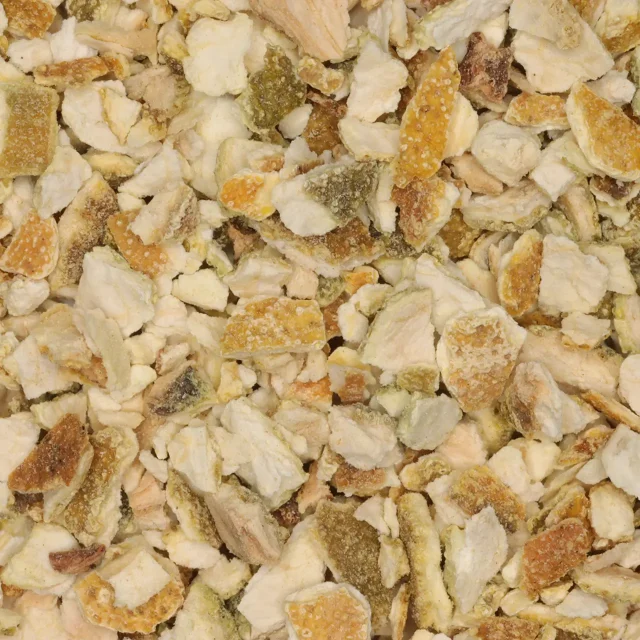
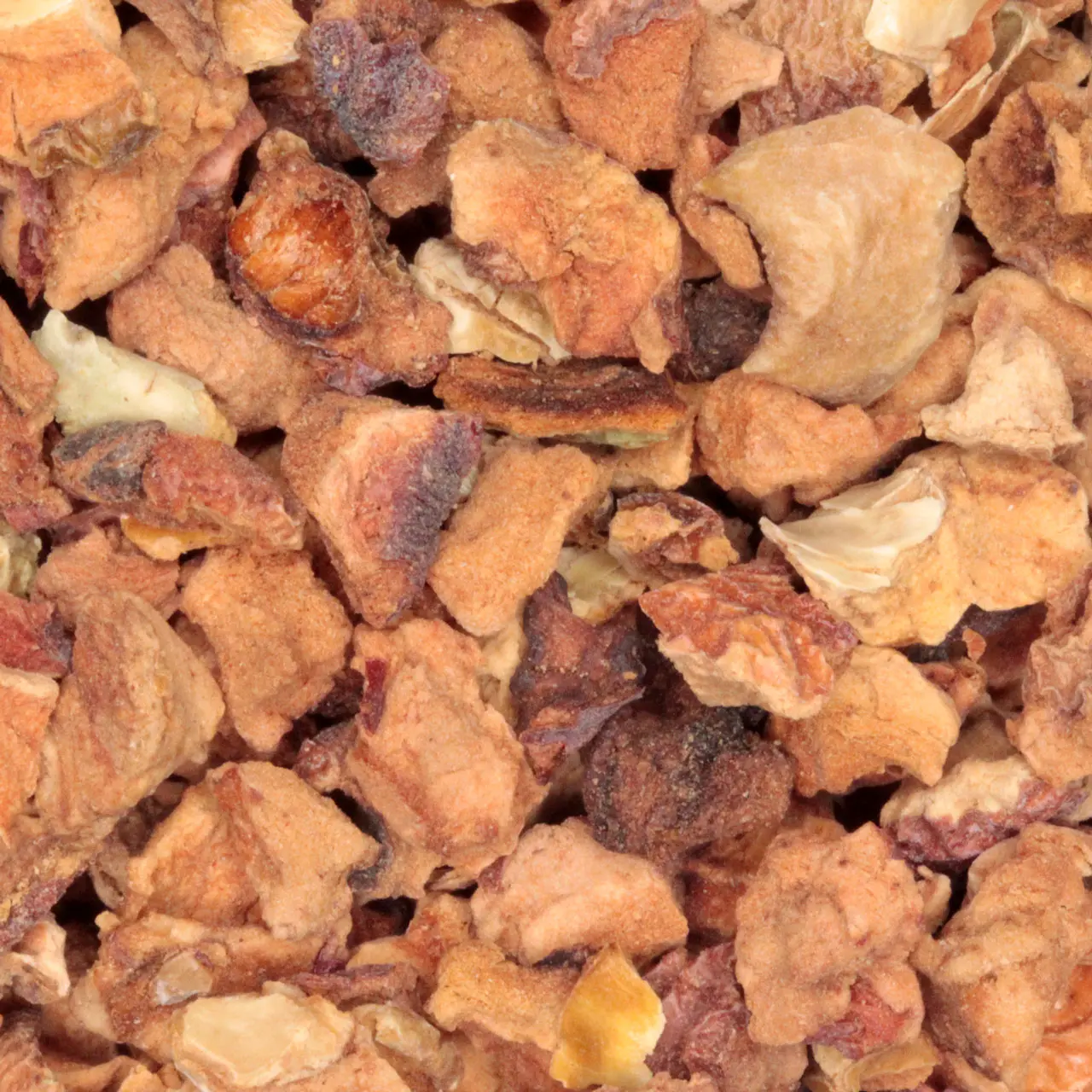
This dried apple consists of small, irregular pieces. They are light in colour, ranging from creamy white to golden brown, and may have a rim of peel. The aroma is gentle and distinctly fruity.
The drying process removes a large proportion of the water from the fruit. As a result, the apple tastes fuller and sweeter than a fresh apple, with a mild sweet-and-sour note. In a herbal infusion, it imparts a gentle, rounded apple flavour. The pieces can be used on their own or as a fruity base in a blend, for example with rosehip, hibiscus, cinnamon or berries.
Fun fact 🍎
An apple seed does not usually grow into the same variety of apple. A seed from an Elstar will therefore not generally produce a new Elstar. To preserve a favourite variety, growers use grafting: a twig from the desired tree is attached to another apple tree. This ensures that the characteristics of the variety are preserved.