


Description
Origin & botany
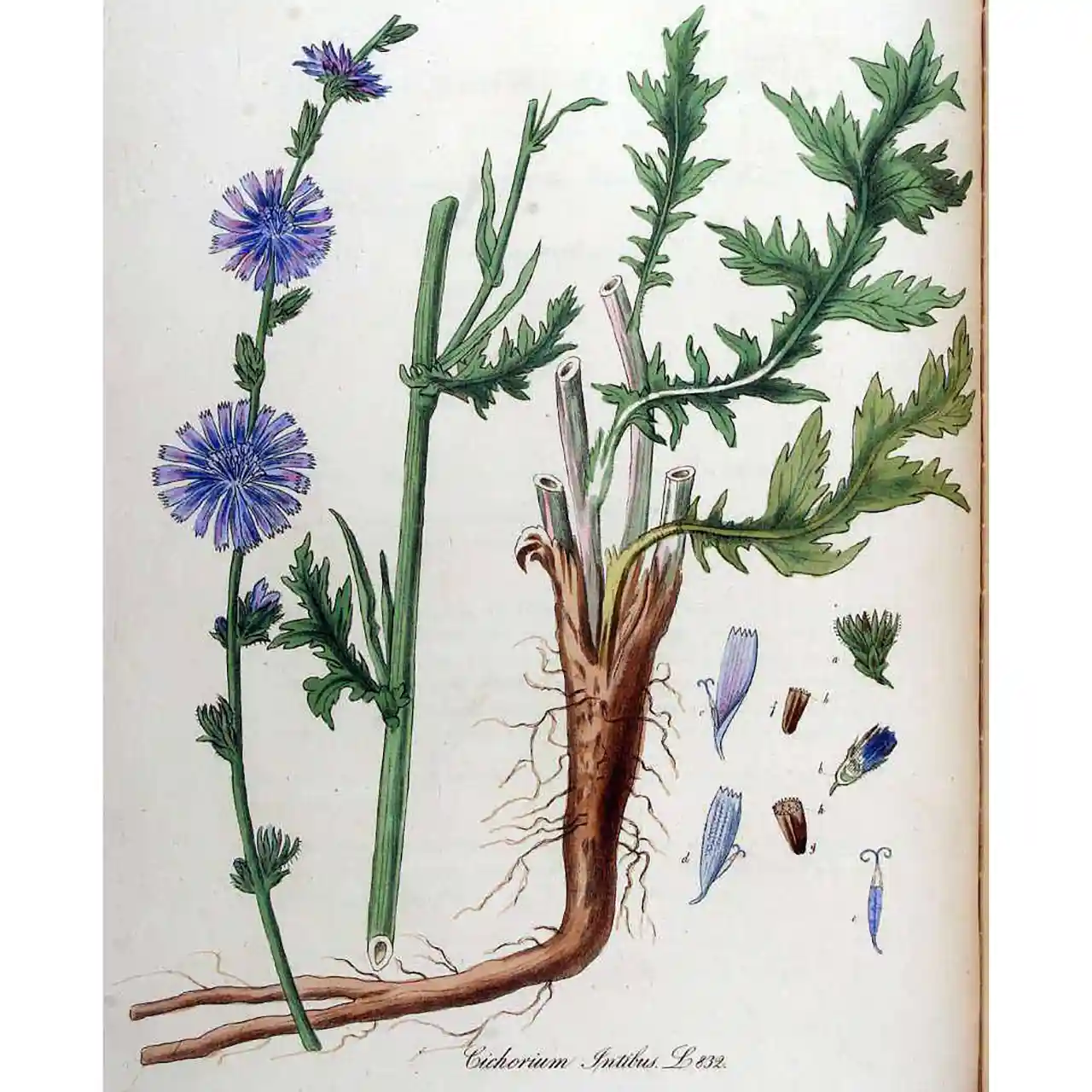
Chicory (Cichorium intybus) is a perennial plant from the Asteraceae family, which also includes daisies and sunflowers. The plant has pale blue flowers and a sturdy taproot: a thick main root that grows straight down into the ground. Only this root is used for this product.
The species occurs naturally across a wide area stretching from Europe and North Africa to parts of Asia. Chicory grows mainly in open, fairly dry places, such as roadsides, dykes and grasslands.
This organic chicory root is dried and not roasted. As a result, its earthy, woody and bitter character remains distinct. Roasted chicory, on the other hand, develops dark, toasty notes reminiscent of coffee.
Traditional use
Dried chicory root has traditionally been used in beverages and household herbal preparations. The roasted and ground root was also added to coffee or used as a coffee substitute, particularly when coffee was expensive or difficult to obtain.
Dit kruid heeft een plaats binnen de Herbal medicine. Deze verwijzing betreft uitsluitend de cultuurhistorische achtergrond en is geen uitspraak over werking of effectiviteit.
Taste, aroma and appearance
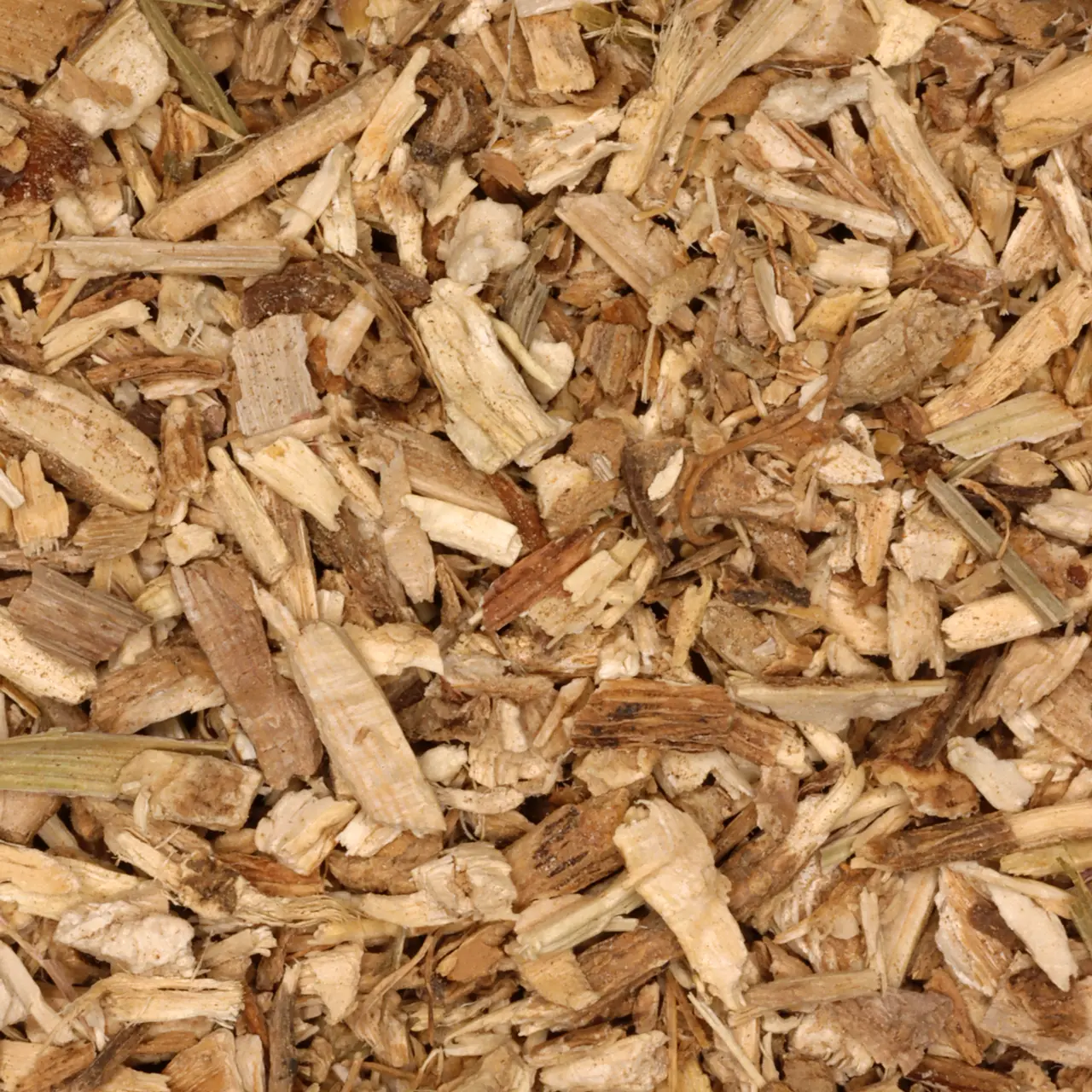
The dried, sliced root consists of firm, irregular pieces. The colour varies from beige and yellow-brown to dark brown. The aroma is mellow and earthy, with woody and slightly spicy undertones.
When steeped in hot water, the unroasted root produces a warm, earthy and distinctly bitter herbal infusion. The burnt, nutty and coffee-like notes of roasted chicory are absent. The aftertaste may leave a slightly dry sensation in the mouth.
Chicory root can be brewed on its own. Its robust character also pairs well with spices, cocoa and other root or leaf herbs.
Fun fact 🥬
Chicory and endive belong to the same plant species, Cichorium intybus. Through selective breeding and different cultivation methods, distinct varieties have emerged: root chicory is characterised by its firm root, whilst endive is known for its pale, compact heads.