


Description
Origin & botany
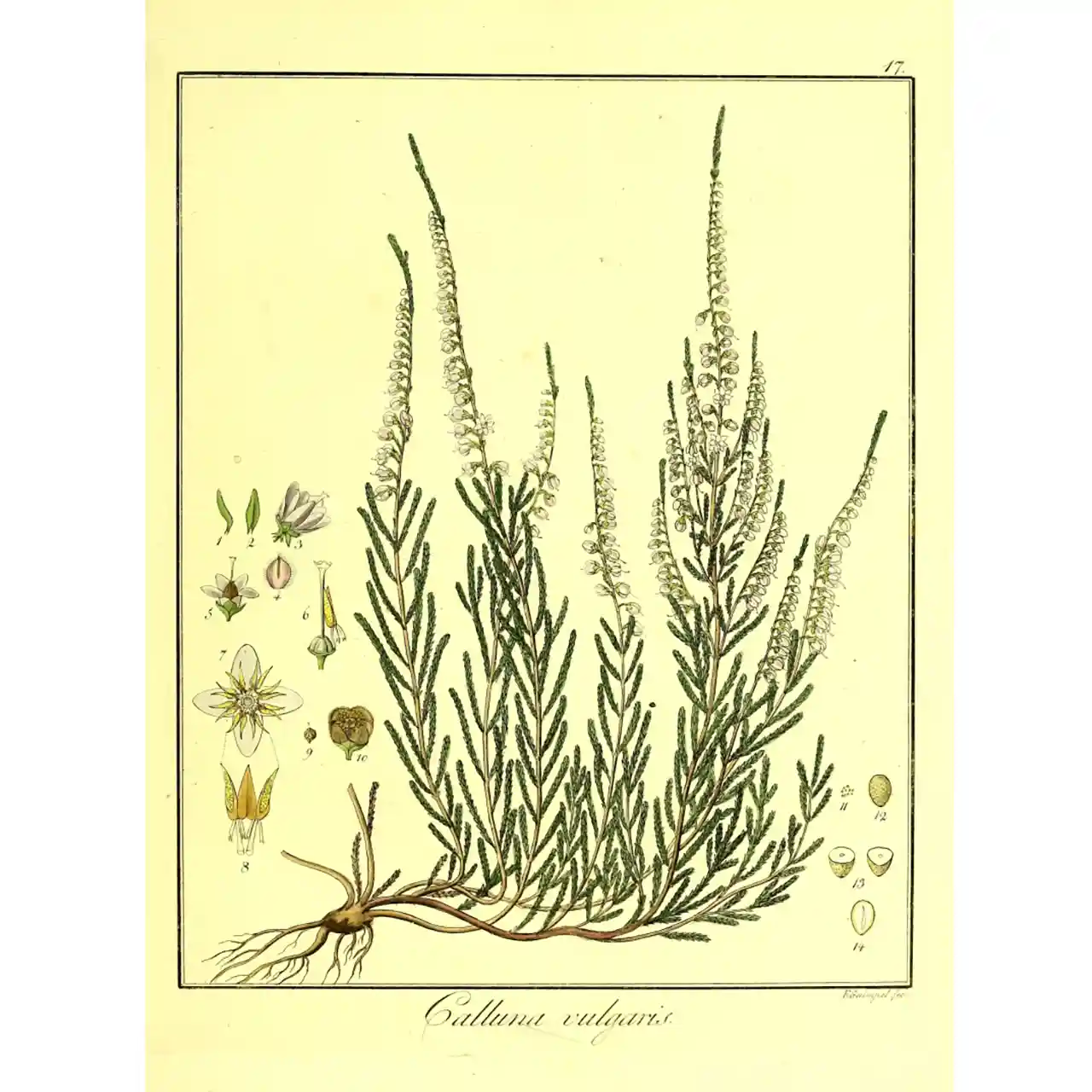
Heather (Calluna vulgaris), also known as common heather, is an evergreen dwarf shrub: a low, woody shrub that grows close to the ground. The plant is characteristic of open heathland and nutrient-poor, acidic sandy soils across large parts of Europe. Very small leaves line the slender, branched stems. During the flowering season, numerous small flowers appear, usually in shades of pink to purple.
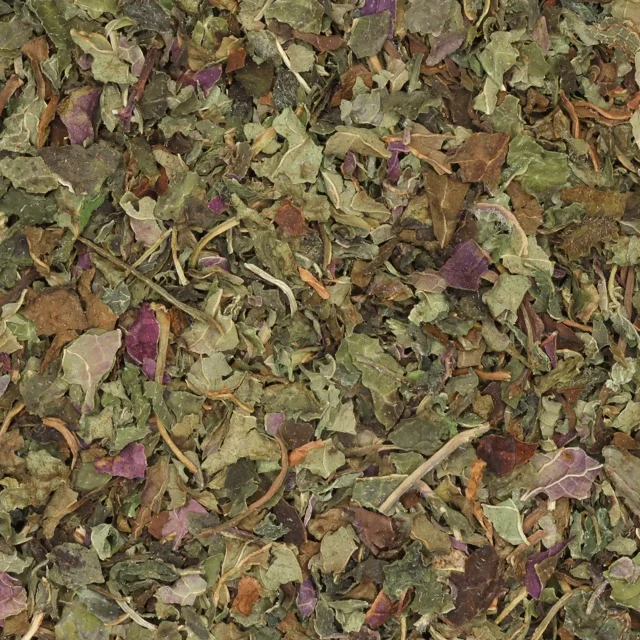
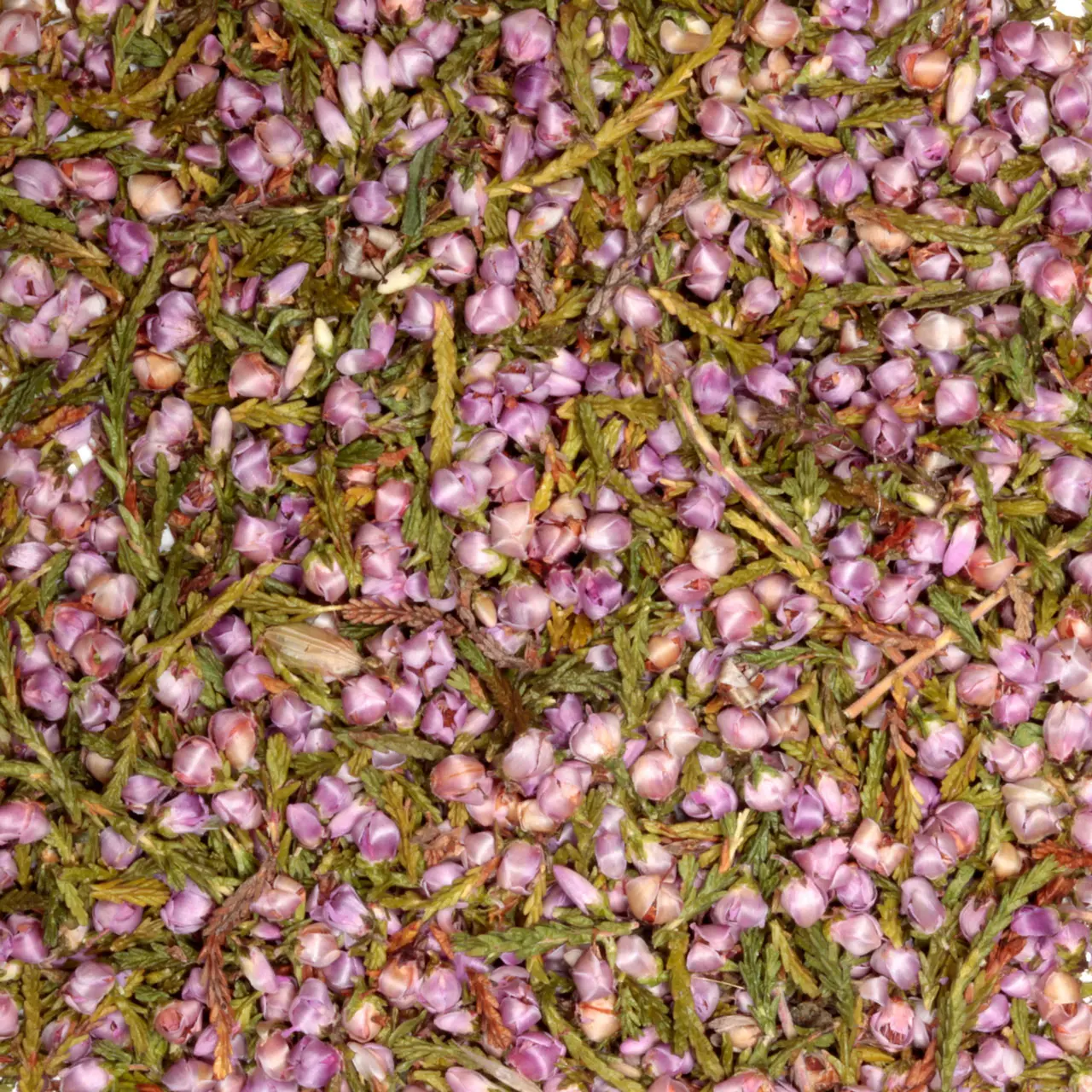
For this product, flowering branches are harvested, dried and ‘shredded’. As a result, the herb consists of a delicate mixture of thin twigs, small leaves and loose flowers. This airy structure also makes heather particularly suitable as a decorative ingredient in tea and herbal blends.
Traditional use
In European rural cultures, heather was gathered for a variety of purposes. The dried flowering parts were used in herbal infusions, whilst the tough twigs were also utilised for, amongst other things, brooms and bedding.
Dit kruid heeft een plaats binnen de Herbal medicine. Deze verwijzing betreft uitsluitend de cultuurhistorische achtergrond en is geen uitspraak over werking of effectiviteit.
Taste, aroma and appearance
As a herbal infusion, heather has a mild, slightly floral flavour with a subtle earthy undertone. The aroma is gentle and understated. Heather can be brewed on its own, but its gentle character also makes it suitable for blends where stronger herbs should not dominate.
The dried herb has a delicate, natural appearance. The branched stems and small pieces of flowers and leaves add extra texture to a blend. The colour varies from greenish-brown to muted purple, depending on the plant parts present.
Fun fact 🍯
Honey produced mainly by bees from heather behaves differently to many other types of honey. Heather honey is naturally often jelly-like, but stirring it temporarily makes it flow more easily. It then becomes firmer again, rather like ketchup, which slowly thickens again after being shaken.