




Description
Greek mountain tea (Sideritis) has been drunk since ancient times in the mountain villages of Greece, Albania and North Macedonia. The name Sideritis is derived from the Greek word 'sideros', which means 'iron' — presumably a reference to the shape of the seed buds or to the popular belief that the plant could help soothe wounds from iron weapons.
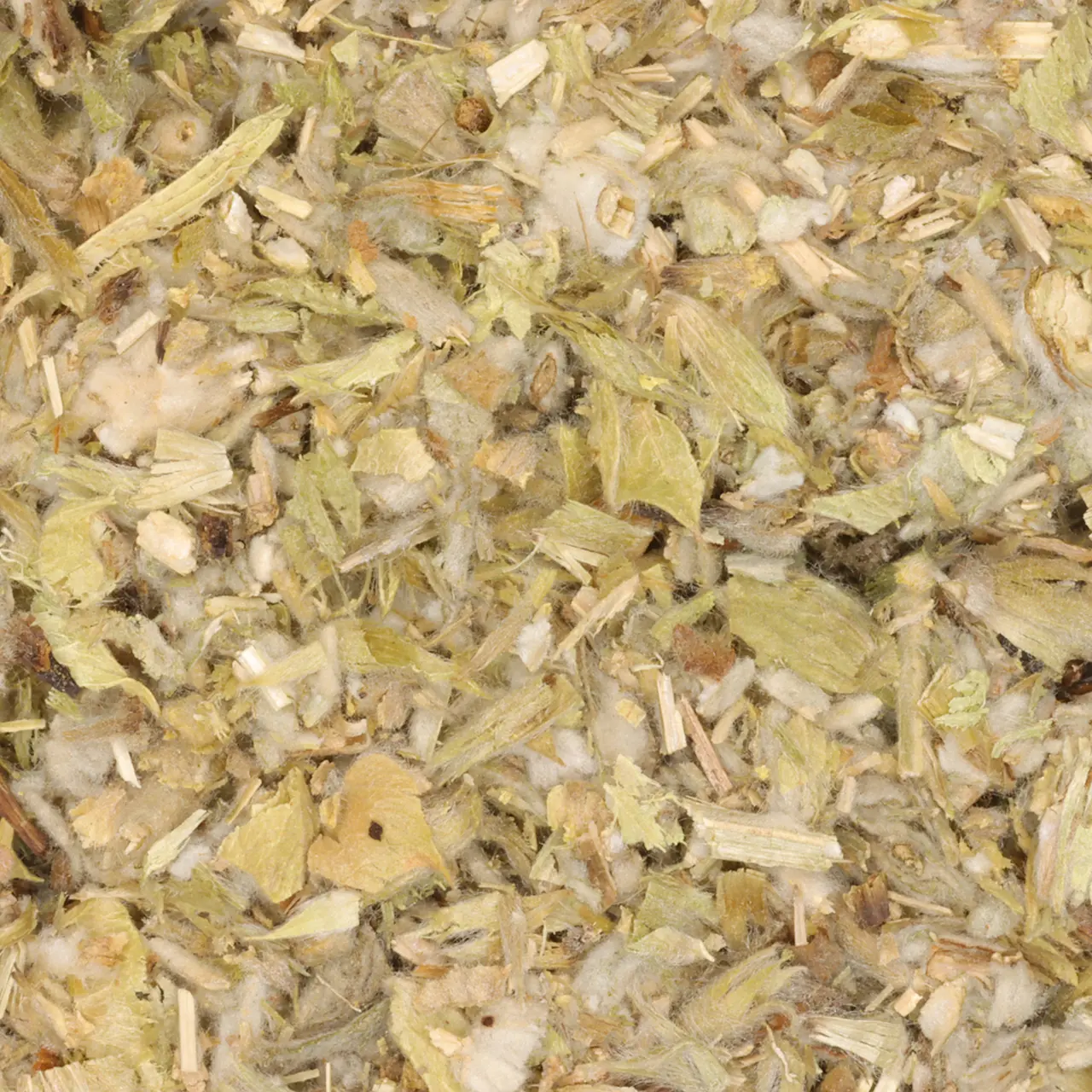
The plant grows on sun-drenched slopes above 1,000 metres, where it can withstand wind, rocky soil and bright sun. The silvery-green leaves and yellow flowers are harvested by hand and dried slowly, allowing the herb to retain its soft, honey-like aroma.
The infusion of mountain tea has a mild, slightly sweet taste with fresh notes of citrus and wild flowers. The herb is often drunk pure, but also combines well with honey or a slice of lemon.
In the Greek mountains, mountain tea is known as 'tsai tou vounou' — literally 'tea of the mountain'. Shepherd families used to take the herb with them on their travels and drink it in the evening by the fire, as a simple ritual of rest after a day in nature. To this day, it remains a symbol of hospitality and simplicity, served in almost every Greek home, from the village pub to the coastal taverna.