
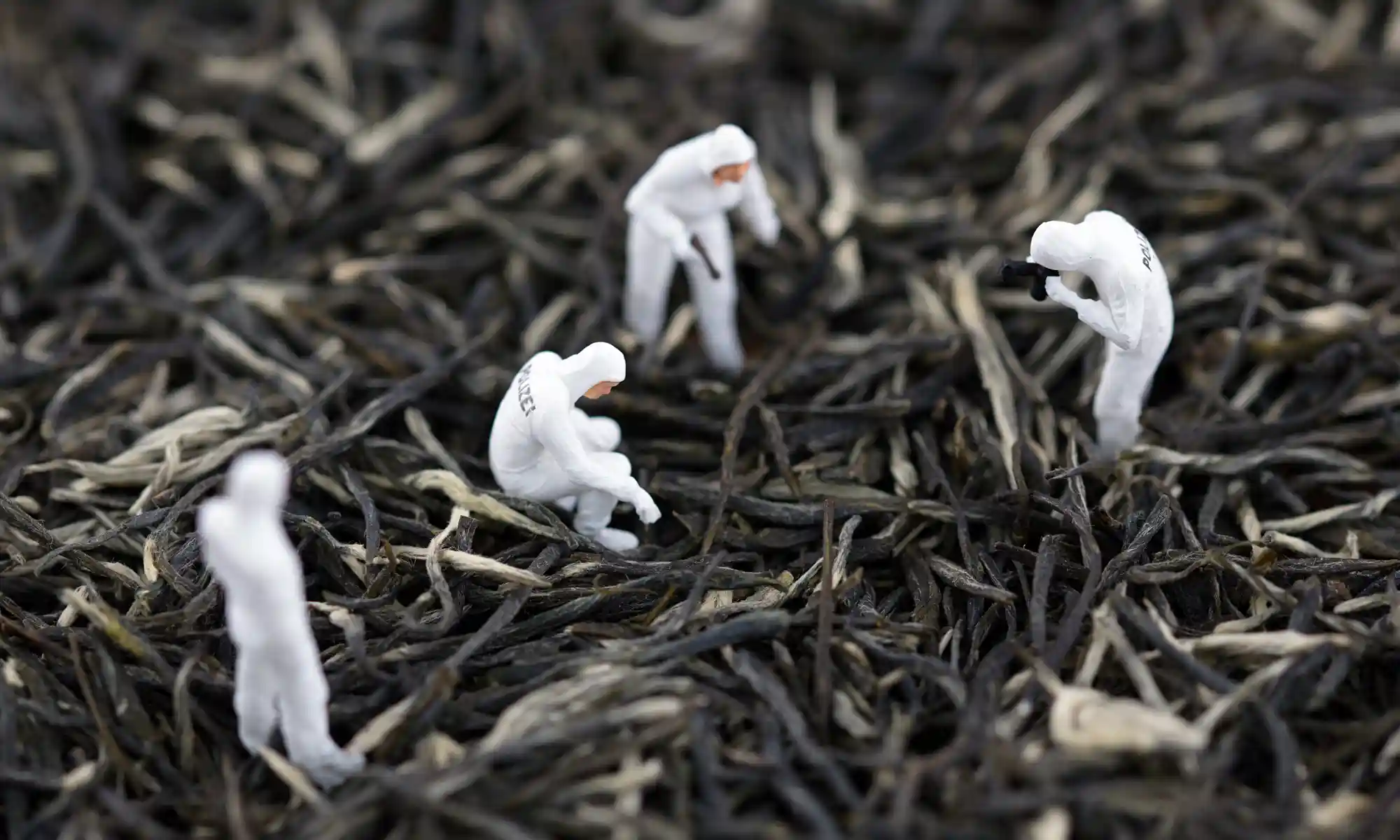
At De Theefabriek (The Tea Factory) | Tea Wholesale, we monitor food safety by implementing an HACCP plan, under the supervision of a Food Safety Consultant from Eurofins and in consultation with the Dutch Food and Consumer Product Safety Authority (NVWA).
The essence of an HACCP (Hazard Analysis and Critical Control Points) system lies in identifying potential threats to the food safety of the food products and naming critical control points and/or general control measures in the production process with which these risks can be controlled.
Prior to HACCP implementation, proper application of the basic principles of food safety, such as hygiene, traceability and climate control, is essential.
The HACCP implementation is based on the Codex Alimentarius International Food Standards of the WHO and FAO.
Food safety always starts with the producers of the traded or processed ingredients, often in countries outside Europe: tea, herbs, spices and fruit in our case. If the producer is certified organic (by reputable independent certification bodies such as Kiwa, Ceres, Ecocert, A Cert, Control Union, etc.), we can at least assume that no chemical synthetic pesticides or artificial fertilisers have been used in cultivation. Because more than 95% of our trade consists of certified organic products, this greatly reduces the risk of food-unsafe batches of ingredients!
Trust is good, control is better… after all, you never know what might happen during cultivation and harvesting, but also during processing (drying, cutting, etc.), storage and transport.
For example, runoff from a higher, non-organic growing area may have occurred, but air pollution and other external factors may also have played a role. Other plants that may contain undesirable substances such as pyrrolizidine alkaloids may have been accidentally harvested, but sticks, stones and other physical contaminants may also have found their way into the product. Additional physical contamination may occur during processing: packaging material, metal particles, hair, etc., but also chemical contamination such as polycyclic aromatic hydrocarbons related to drying and smoking, oil from machines, etc. Storage areas and containers may have been fumigated, and residues may end up in the food. Damp and/or unhygienic conditions can cause microbiological contamination, such as mould and bacterial infections.
We prefer to leave the chemical and microbiological food safety checks for 99% of our trade to the European importers/processors from whom we purchase our ingredients. At present (February 2024), we have 12 regular importers with whom we do business. These include importers from whom we have been sourcing ingredients for over 30 years and only one importer from whom we have been sourcing tea for less than 5 years. All these importers are certified organic for the import, trade and/or processing of the organic ingredients we purchase from them, ensuring that the organic chain remains closed. In addition, seven of them hold a highly reputable food safety certificate: four IFS Food and three FSSC 22000. Two importers have a simpler certificate: one ISO 9001: 2015 and one BRCGS – Global Standard for Food Safety Issue 9: August 2022 Grade: A+. Three importers do not have additional certification.
Because importers are primarily responsible for the food safety of products placed on the European market, they carry out laboratory analyses on relevant parameters, such as pesticide residues, microbiology and other potential threats to food safety, based on their own risk analysis. We can request the results of these analyses or view them directly when purchasing new batches of ingredients. We do this regularly to ensure the food safety of what we purchase.
We check for physical contamination of the products ourselves. This type of contamination, in the form of metal particles, pieces of plastic, wood, paper, insects, etc., is of course highly undesirable but does not usually pose a risk to public health, given the intended use of the product, namely making tea and infusions. Because virtually everything that passes through our hands is ‘read’ due to the manual, small-scale processing and packaging methods, we are able to identify most problems at an early stage. We also have a bar magnet that we can use to test products for metal contamination. Live physical contamination, such as insects, maggots, etc., is virtually eliminated because importers treat our deliveries with high-pressure CO2.
Occasionally, we also import some conventional tea and herbs ourselves. For example, the special ‘Blooming Teas’ and Butterfly Pea Blossom from China. Without exception, these products are analysed at source on our behalf by recognised European research institutes such as SGS or Eurofins. Only when the analysis results show that the products are EU-compliant and food-safe do we bring them to the United Kingdom.
In addition to the food safety of the foodstuffs themselves, you also have to consider the suitability of the packaging materials for packaging that food. For example, no undesirable chemical substances from the packaging material may end up in the food. This is investigated by, for example, performing migration tests on the materials used. Based on these analyses, manufacturers/importers of packaging materials draw up Declarations of Conformity, which substantiate that the materials are indeed suitable for packaging (certain types of) food.
We can’t resist adding a few concluding remarks.
We understand that after reading the above, you may not dare to drink a cup of tea or sell a bag of herbs. It’s a bit like going to the solicitor or taking out insurance. The most dramatic scenarios are considered to prevent you from being left empty-handed if a calamity occurs. Food safety is important and faces threats in many forms. It is good to be fully aware of this and, where necessary and possible, to eliminate the threats by, for example, implementing a good and sensible purchasing policy and building in controls.
We would like to emphasise that importers run a high risk when importing potentially unsafe ingredients. If, during a random check by the NVWA (or one of its partner agencies) upon arrival in Europe, a batch of ingredients is assessed as non-compliant with EU legislation, the importer will be in serious trouble. The batch can no longer be placed on the market and returning it is often impossible or very costly. In that sense, there is a significant self-cleansing effect. And you cannot ‘take a chance’ with these random checks, because only 1 in 100 containers are selected, for example. We have an importer where, for example, 100% of the tea containers from China are tested by the NVWA (at the importer’s expense). As an importer, you want to be as sure as possible that the ingredients meet European food safety requirements before you actually import them. Importers who mess things up simply won’t make it.
Finally, one more observation. In the Netherlands, we have noticed that the NVWA seems to be moving closer to consumers, at the retail level, demanding proof of the food safety of the products sold, at least in the tea world in which we operate. In practice, this means that suppliers to retailers, wholesalers (including us), are inundated with requests for analysis results, product specifications, certificates and substantiation of food safety policy. We don’t know how things work in other sectors, but we can hardly imagine fruit and vegetable retailers asking wholesalers or auctioneers for product specifications and analysis results. Or butchers, bakers, delicatessens and nut shops asking their direct suppliers. Perhaps it would be better to create a kind of white list of importers and wholesalers in the tea, herbs and spices sector, concentrate the control activities there and exempt retailers who purchase from this white list from having to request food safety information. This would allow the scarce inspectors to be deployed more efficiently and enable retailers to concentrate on what they are good at and enjoy doing: selling beautiful, natural teas, herbs and spices to enthusiastic consumers!