


Description
Origin & botany
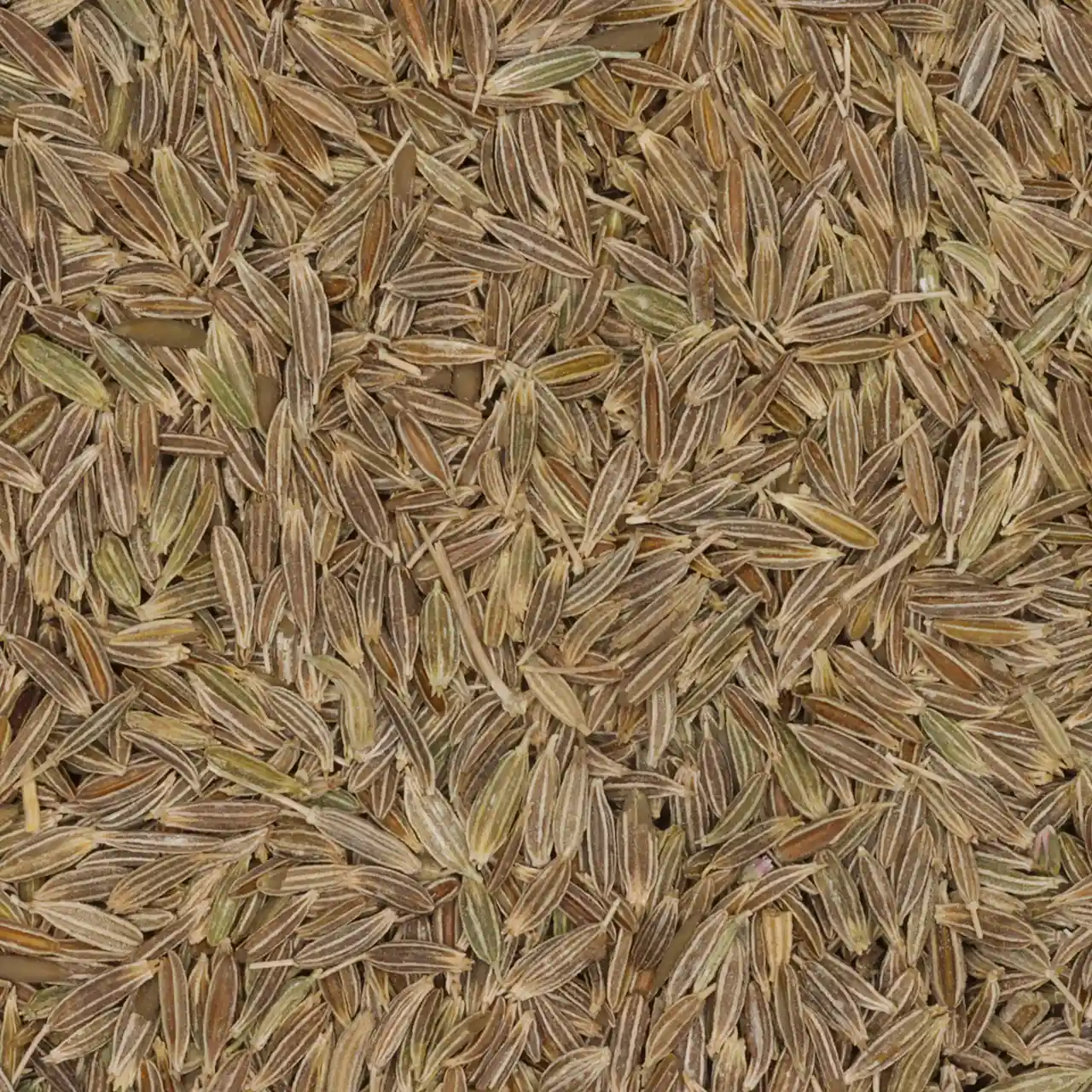
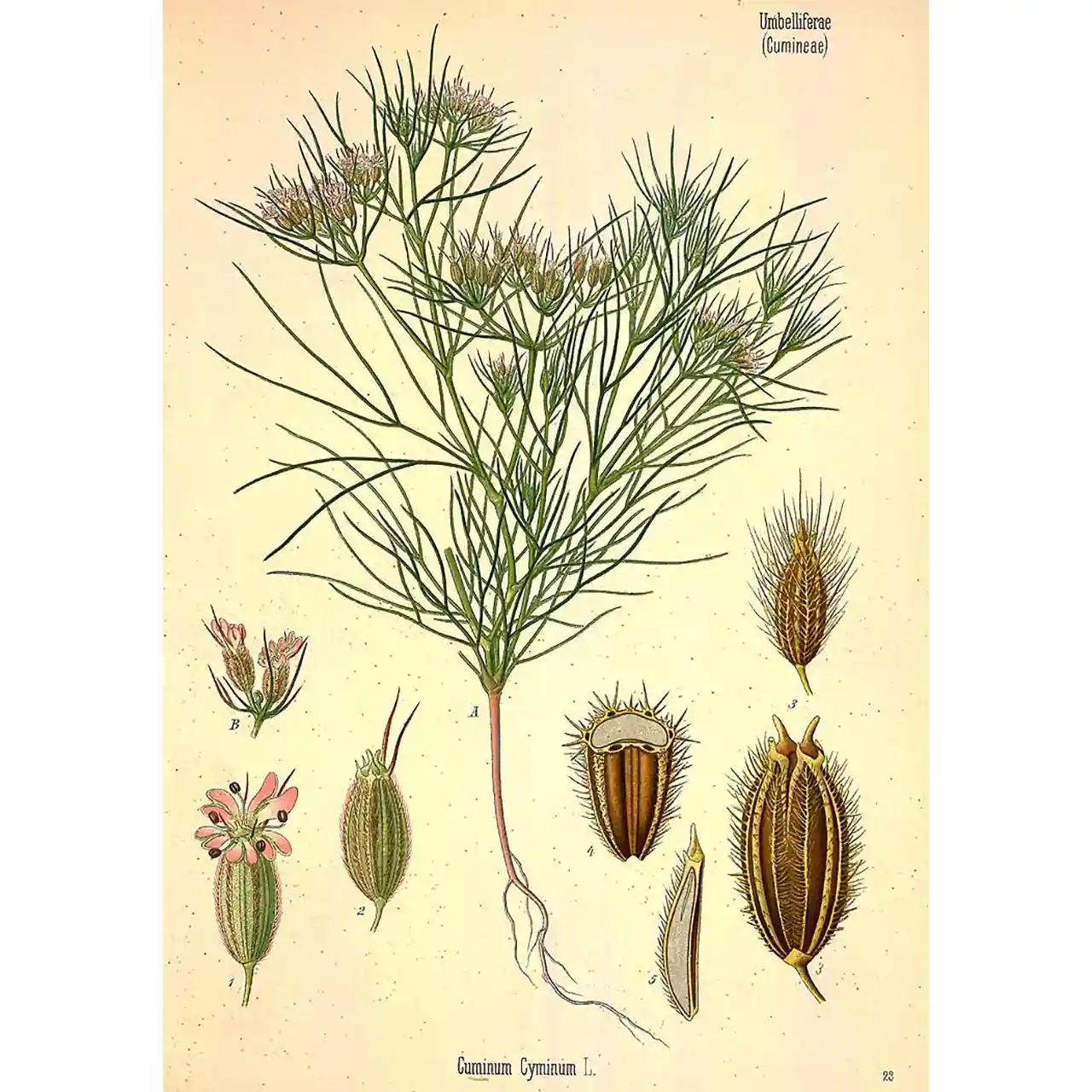
Cumin (Cuminum cyminum) is an annual plant from the umbellifer family, which also includes coriander, fennel and parsley. The species has been cultivated since ancient times around the Mediterranean and in West and South Asia. The plant produces small white or pink flowers. These are followed by the elongated, finely ribbed grains we know as cumin seeds. Their colour varies from light brown to brownish-green.
Traditional use
Cumin has long been a staple in the cuisines of North Africa, West and South Asia, and the Mediterranean region. The spice was used in bread, pulses, meat dishes and spice mixes, amongst other things. Through trade and local culinary traditions, cumin also became established elsewhere, for example as a flavouring in European cheeses and in dishes from Central and South America.
Deze specerij heeft een plaats binnen Ayurveda. Deze verwijzing betreft uitsluitend de cultuurhistorische achtergrond en is geen uitspraak over werking of effectiviteit.
Flavour, aroma and appearance
Cumin seeds have a powerful, warm aroma with earthy and slightly smoky notes. The flavour is distinctly spicy, slightly bitter and a little pungent. Crushing the seeds releases a stronger aroma; briefly toasting them gives the spice a warmer, slightly nutty scent. The whole or crushed seeds are suitable for curries, stews, bread, cheese and spice blends. Cumin seeds can also be used to make a spicy infusion with a distinct, savoury aroma and a light golden-brown colour.
Fun fact 🌱
What we call ‘cumin seeds’ in the kitchen are, botanically speaking, the dried fruit of the plant. This also applies to well-known relatives such as coriander and fennel. The actual seed is hidden inside each small fruit.